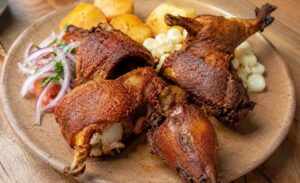
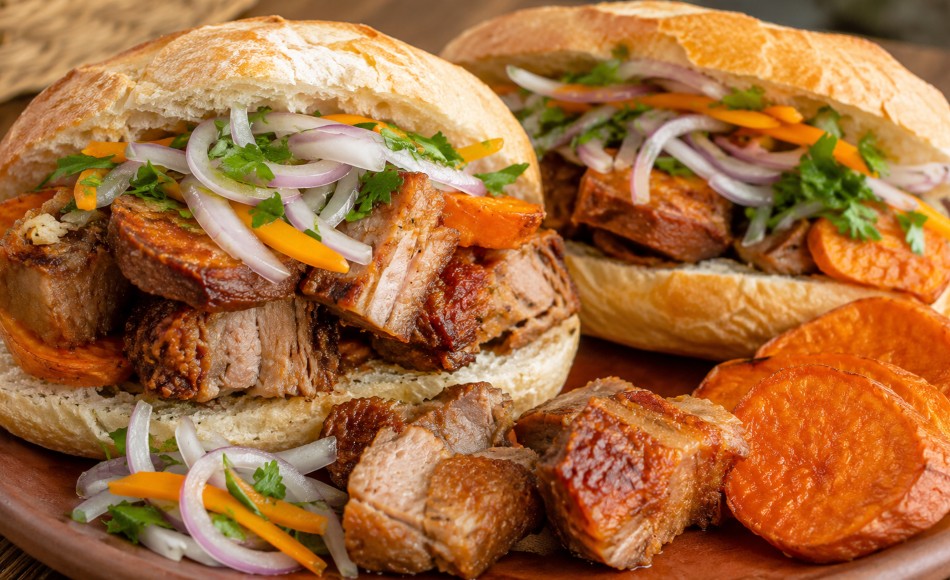
Peruvian pork chicharrón is a classic dish, especially popular for Sunday breakfast, market meals, street food, and criollo-style restaurants. It is made by simmering pork until tender and then browning it in its own rendered fat, creating juicy meat with a crisp golden exterior.
The most traditional way to enjoy it is in a sandwich with fried sweet potato and salsa criolla. The contrast of savory pork, sweet potato, fresh onion, and crusty bread has made pan con chicharrón one of Peru’s best-known breakfasts.
Print
Peruvian Pork Chicharrón
- Prep Time: 25 minutes
- Cook Time: 1 hour 5 minutes
- Total Time: 1 hour 30 minutes
- Yield: 6
- Category: Main Course
- Cuisine: Peruvian
Ingredients
- 1 kg pork belly with skin, cut into large pieces (about 2.2 lb)
- 500 g pork ribs, cut into pieces (about 1.1 lb)
- 20 g garlic paste (4 garlic cloves)
- 12 g salt (2 teaspoons)
- 3 g ground black pepper (½ teaspoon)
- 5 g ground cumin (1 teaspoon)
- 750 ml water (3 cups)
- 500 g yellow sweet potato, peeled and cut into thick slices (about 1.1 lb)
- 300 ml vegetable oil for frying the sweet potato (1¼ cups)
- 250 g red onion, thinly sliced (2 medium onions)
- 100 g fresh ají amarillo, seeded and cut into strips (2 medium peppers)
- 30 ml lime juice (2 tablespoons)
- 10 g chopped fresh cilantro (¼ cup)
- 4 g salt for the salsa criolla (¾ teaspoon)
- 6 French rolls or crusty sandwich rolls
Preparation
- Season the pork, mix the pork belly and ribs with the garlic, salt, black pepper, and cumin. Let the meat rest for 20 minutes so it absorbs the seasonings.
- Cook the pork, place the seasoned pork in a wide pot and add the 750 ml of water. Cook over medium heat with the pot partly covered for 35 to 45 minutes, until the water evaporates and the pork is tender.
- Brown the chicharrón, once all the liquid has evaporated, lower the heat slightly and let the pork fry in the fat rendered from the pork belly. Turn the pieces carefully for 15 to 20 minutes, until golden and crisp outside while remaining tender inside.
- Fry the sweet potato, heat the vegetable oil in a skillet and fry the sweet potato slices over medium heat for 6 to 8 minutes per side, until golden and tender. Drain them on paper towels.
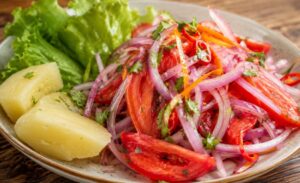
- Make the salsa criolla, mix the red onion, ají amarillo, lime juice, cilantro, and salt. Let it rest for 10 minutes so the onion softens slightly and the flavors come together.
- Serve the chicharrón, place hot pork pieces inside each roll, add fried sweet potato, and finish with salsa criolla. You can also serve the pork on a plate with bread on the side.
Chef’s tips
- Use pork belly with skin because it renders enough fat for browning and gives the dish a more traditional texture.
- Do not add oil to fry the pork; the fat released by the pork belly should be enough after the water evaporates.
- Keep the heat moderate during the first stage so the pork becomes tender before it browns.
- Avoid cutting the pork too small, since small pieces can dry out while frying.
- Make the salsa criolla close to serving time to keep the lime and chili flavors fresh.
Traditional variations
In some regions, chicharrón is made with ribs, pork leg, or bone-in pork pieces. It is also common to serve it with hominy corn, toasted corn, or fried cassava, especially outside Lima.
In northern Peru, chicharrón is often part of more substantial breakfasts served with tamales, salsa criolla, and coffee.
How to serve
The most classic presentation is pan con chicharrón: a crusty roll filled with golden pork, fried sweet potato, and salsa criolla. Serve it immediately, while the pork is still hot and the exterior remains crisp.
You can also serve it on a plate with sweet potato, hominy, or toasted Andean corn. Drip coffee, chicha morada, or fresh fruit juice are traditional-style drink options.
Recommended accompaniments
- French rolls
- Fried sweet potato
- Salsa criolla
- Cooked hominy corn
- Toasted Andean corn
- Drip coffee
- Chicha morada
Food tradition
Pan con chicharrón is one of Peru’s most emblematic breakfasts and is closely tied to Sunday mornings. For many families, buying freshly made chicharrón or gathering at a traditional chicharronería is part of a shared weekend ritual.
The method of simmering the pork before browning it in its own fat makes full use of the meat and creates a texture that is difficult to achieve by frying the pork directly.
Frequently Asked Questions
Pork belly with skin is one of the most traditional choices because it has a balance of meat, fat, and skin that produces juicy, golden pieces. Pork ribs or a mixture of belly and ribs also work well. Avoid very lean cuts because they do not release enough fat for the characteristic final browning.
The first cooking stage tenderizes the pork and helps the seasonings penetrate the meat. Once the water evaporates, the natural fat from the pork belly remains in the pot and starts to fry the pork. This creates meat that is tender inside and crisp outside without needing much additional oil.
Do not use very high heat during the first cooking stage, and wait until the pork is tender before browning it. Use medium or large pieces and do not fry them for too long. Once the outside is golden and crisp, remove the pork from the pot so it does not dry out.
You can cook the pork until tender ahead of time and refrigerate it for one day. Before serving, reheat it in a pot or skillet and brown it again in its rendered fat. Make the salsa criolla and fried sweet potato close to serving time for the best texture and freshness.