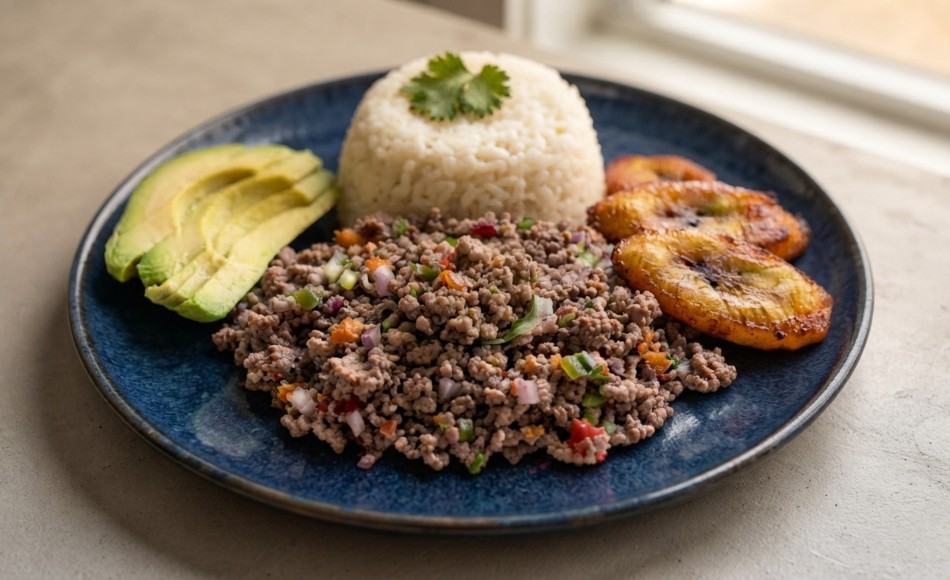
Salpicón de res is one of the most beloved dishes in Nicaraguan home cooking: a refreshing preparation made with finely chopped beef, mint, onion, and sour orange juice that brightens any family table. Its herbal, tangy flavor sets it apart from other regional beef dishes and makes it a staple found both in home kitchens and at Nicaragua’s famous nighttime street food stalls, known as fritangas.
This dish is typically prepared on weekends and at family gatherings, served alongside warm tortillas, rice, beans, or fried plantains. For many Nicaraguans, salpicón brings back memories of grandmother’s kitchen and long afternoons spent with family, making it one of the recipes that best captures the simplicity and authentic flavor of the country’s cuisine.
Print
Nicaraguan Beef Salpicón
- Prep Time: 30 minutes
- Cook Time: 55 minutes
- Total Time: 1 hour 45 minutes
- Yield: 4 servings
- Category: Main Course
- Cuisine: Nicaraguan
Ingredients
- 700 g of beef flank or brisket cut (posta) (about 1½ pounds)
- 2 liters of water, for boiling the beef (8 cups)
- 2 garlic cloves
- 1 medium white onion
- 15 g of fresh mint leaves (about 1/2 cup)
- 120 ml of sour orange juice (or lime juice) (1/2 cup)
- Salt, to taste
- Black pepper, to taste
- 150 g of ripe tomato (1 medium tomato) (optional)
- 40 g of radishes (2 to 3 radishes) (optional)
- Tortillas, rice, or plantain slices, for serving (optional)
Preparation
- Boil the beef, place the beef in a pot with enough water to cover it, add the garlic cloves and salt to taste, and cook over medium heat for 45 to 60 minutes until the meat is very tender and shreds easily when pierced with a fork.
- Cool and chop the beef, remove the meat from the broth and let it rest until it reaches room temperature so it’s easy to handle, then chop it into very small pieces with a sharp knife, aiming for a fine, even texture similar to a mince.
- Prep the fresh ingredients, while the meat cools, finely chop the white onion and mint, and, if using, the tomato and radish, keeping all the pieces small and even.
- Mix the salpicón, in a large bowl combine the chopped beef with the onion, mint, and any other fresh ingredients; add the sour orange juice, salt, and pepper to taste, and mix well until the flavors are fully combined.
- Serve the dish, let the salpicón rest for a few minutes so the flavors settle, then serve it fresh alongside warm tortillas, rice, or fried plantains.
Practical Tips
- Chop the beef by hand with a knife instead of using a food processor, since this keeps the traditional texture of the salpicón intact.
- If you can’t find sour orange, substitute it with lime juice mixed with a little sweet orange juice to get closer to its signature flavor.
- Use fresh mint rather than dried, since it’s what gives this dish its distinctive aroma.
- Prepare the salpicón a few hours ahead and refrigerate it before serving, since the flavor improves as it rests.
Traditional variations
- In some parts of the country, chopped tomato is added for extra freshness.
- Some families add a touch of chopped chile congo for a mild kick of heat.
Traditional Way to Serve
Salpicón is served cold or at room temperature, usually as a main dish alongside freshly warmed corn tortillas. It’s commonly enjoyed with a glass of cacao fresco or chicha, especially during weekend lunches.
Recommended sides
- Warm corn tortillas
- White rice
- Red beans or casamiento (rice and beans)
- Fried ripe plantains
- Avocado
History and Tradition
Salpicón de res traces its roots back to the colonial era, when sour citrus like sour orange became popular across Central America for seasoning and helping preserve meat before refrigeration was widely available. Over time, this technique combined with local herbs like mint to create the Nicaraguan version known today, quite different from the salpicones of other countries, which often include pickled vegetables.
Frequently Asked Questions
Nicaraguan Beef Salpicón is a traditional recipe made with simple ingredients and a homemade cooking method that preserves its authentic flavor.
Following the recipe step by step, the total time will depend on how many servings you make and the cooking times listed.
It goes well with classic accompaniments and typical beverages, depending on the occasion and family tradition.
In most cases yes: stored in a sealed container in the refrigerator, it stays good for the next day, as long as its freshness is checked before serving.
Yes, small variations are fine based on personal preference, as long as the key ingredients that define its traditional flavor are kept.