Colombian coastal kibbe is one of the clearest examples of Arab influence in Caribbean Colombian food, especially in Barranquilla, Cartagena, Montería, and Maicao. It arrived with Lebanese, Syrian, and Palestinian immigrant communities and became a familiar item in bakeries, fried-snack shops, and family gatherings.
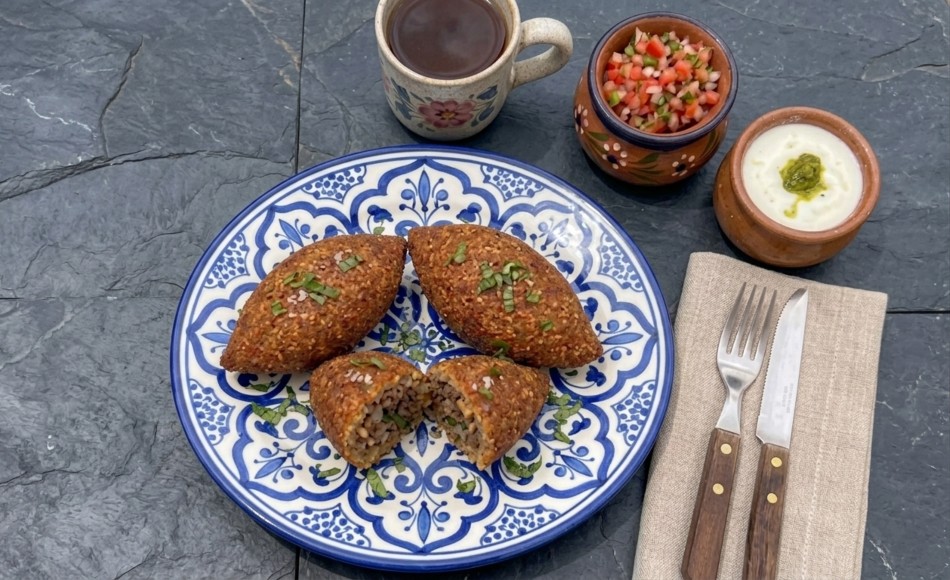
Unlike some Middle Eastern versions, Colombian kibbe is usually deep-fried and shaped like a small football. Its crisp bulgur-and-beef shell surrounds a savory filling of ground beef, onion, and fresh mint. It is often eaten as a snack, appetizer, or part of a casual Caribbean-style meal.
Print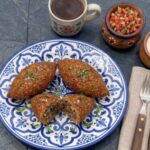
Colombian Coastal Kibbe
- Prep Time: 50 minutes
- Cook Time: 25 minutes
- Total Time: 1 hour 15 minutes
- Yield: 16
- Category: Appetizer
- Cuisine: Colombian
Ingredients
For the outer shell
- 250 g fine bulgur wheat (1 1/2 cups)
- 500 ml hot water (2 cups)
- 500 g ground beef (about 2 1/4 cups)
- 100 g white onion, grated (1 medium onion)
- 15 g fresh mint, finely chopped (1/2 cup)
- 5 g salt (1 teaspoon)
- 2 g ground black pepper (1/2 teaspoon)
- 2 g ground cumin (1 teaspoon)
For the filling
- 400 g ground beef (about 1 3/4 cups)
- 150 g white onion, finely chopped (1 1/2 medium onions)
- 15 ml vegetable oil (1 tablespoon)
- 10 g garlic, minced (2 cloves)
- 15 g fresh mint, finely chopped (1/2 cup)
- 3 g salt (1/2 teaspoon)
- 1 g ground black pepper (1/4 teaspoon)
- 2 g ground cumin (1 teaspoon)
- 30 g pine nuts or chopped almonds (1/4 cup), optional
For frying
- 1.5 l vegetable oil (6 cups)
Preparation
- Soak the bulgur, place the bulgur in a large bowl, cover it with the hot water, and let it rest for 25 minutes, until tender and nearly all the water has been absorbed. Drain it well through a fine strainer or squeeze it gently with your hands to remove extra moisture.
- Make the filling, heat the oil in a skillet and cook the onion and garlic for 4 minutes, until translucent. Add the 400 g of ground beef, salt, black pepper, and cumin. Cook for 8 to 10 minutes, breaking up the meat, until browned and dry. Stir in the mint and pine nuts or almonds, then let the filling cool completely.
- Prepare the kibbe dough, combine the soaked bulgur with the 500 g of ground beef, grated onion, mint, salt, black pepper, and cumin. Knead for 4 to 5 minutes, until the mixture is even and easy to shape. If it feels too dry, add 15 ml cold water (1 tablespoon) and knead again.
- Shape the kibbes, take about 70 g of the outer mixture and roll it into a ball. Use your thumb to make a deep cavity without breaking through the shell. Fill it with 25 g of the cold beef mixture, close the opening, and shape it into an oval with gently pointed ends.
- Fry until golden, heat the oil over medium-high heat. Fry the kibbes in small batches for 4 to 5 minutes, until deeply golden and crisp. Do not move them too much at the beginning, so the outer shell can set properly.
- Drain and serve, remove the kibbes with a slotted spoon and drain them on paper towels for 2 minutes. Serve hot with lime wedges and Colombian Caribbean-style ají.
Chef’s tips
- Drain the bulgur thoroughly so the outer shell does not become soft or break while shaping.
- Let the filling cool fully before stuffing the kibbes; warm filling weakens the outer layer.
- Shape all the kibbes before frying so they cook evenly and look consistent.
- Fry in small batches to keep the oil temperature steady.
- Chill the shaped kibbes for 30 minutes before frying for a firmer shape.
Traditional variations
Along Colombia’s Caribbean coast, you will also find kibbes filled simply with beef and onion, without nuts. Some families add a small amount of cinnamon or allspice to the filling, following flavor traditions inherited from Arab cooking. Smaller versions are common in bakeries and sold as party snacks.
How to serve
Serve Colombian coastal kibbe hot with lime wedges, cilantro ají, or suero costeño. As part of a larger meal, pair it with white rice, a fresh salad, or locally adapted tabbouleh. Cold soda, limeade, or tamarind juice are classic drink choices.
Recommended sides
- Suero costeño.
- Cilantro and onion ají.
- Lime wedges.
- Tomato, onion, and cucumber salad.
- White rice.
- Limeade or tamarind juice.
Food culture note
Kibbe came to Colombia with Arab immigrants who settled in the Caribbean region between the late nineteenth and early twentieth centuries. The recipe adapted to local ingredients and eating habits while keeping the bulgur, beef, and aromatic herbs that define the dish.
Today, it is deeply integrated into coastal Colombian food culture and is sold in bakeries, street-food stands, and family celebrations alongside other beloved Caribbean snacks.
Frequently Asked Questions
Use fine bulgur wheat, often labeled “kibbe wheat” or cracked wheat. Its small grain size creates a smooth outer shell after soaking and makes shaping easier. Coarse bulgur can create a rough texture and may make it harder to seal the kibbes properly.
Kibbe can split if the bulgur is too wet, the outer layer is too thin, or the filling is warm. Drain the bulgur thoroughly, keep the shell evenly thick, and cool the filling before shaping. Avoid overcrowding the fryer, since a sudden temperature drop can also affect the crust.
Yes. Arrange the shaped kibbes on a tray, freeze them until firm, and transfer them to an airtight freezer bag. Fry directly from frozen over medium heat, adding 2 to 3 minutes to the cooking time so the center becomes fully hot.
Yes, although fried kibbe is the more traditional version on Colombia’s Caribbean coast. Brush the kibbes lightly with oil and bake at 200 °C / 400 °F for 20 to 25 minutes, turning them halfway through. They will be lighter, but less crisp than the fried version.