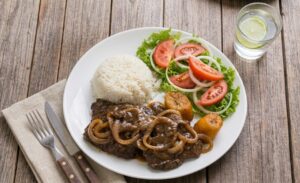
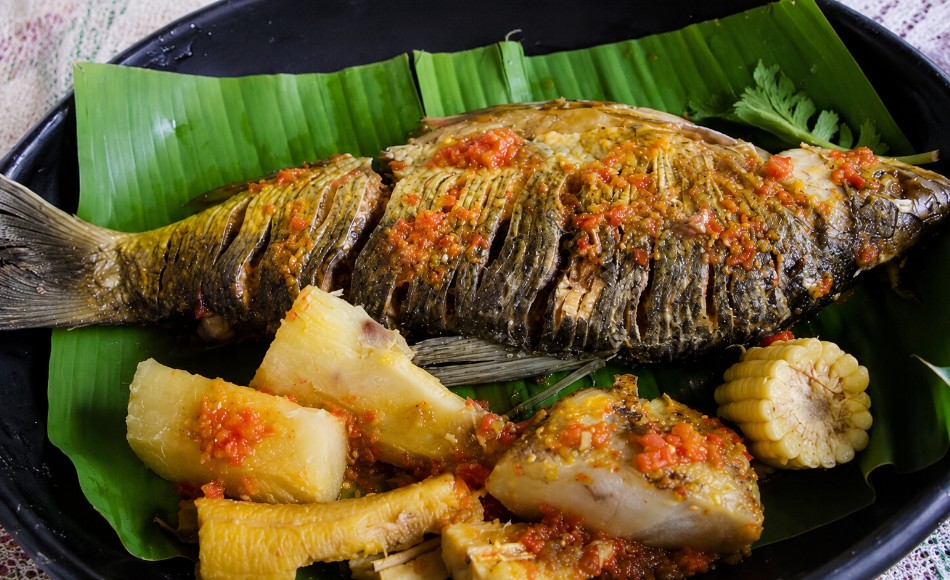
In Colombia’s river communities, especially around the Magdalena River and other areas where freshwater fish is part of everyday cooking, viudo de bocachico is a deeply traditional dish. It is a hearty preparation where fish is gently cooked with cassava, green plantain, potatoes, corn, and a seasoned tomato-onion base.
Bocachico is one of the most iconic freshwater fish in Colombian home cooking. This dish is often prepared for family gatherings, riverside meals, weekend lunches, and regional celebrations. It is commonly served with white rice, Colombian hot sauce, and, in some areas, a spoonful of hogao on top.
Print
Colombian Bocachico Fish Stew
- Prep Time: 25 minutes
- Cook Time: 55 minutes
- Total Time: 1 hour 20 minutes
- Yield: 4
- Category: Main Course
- Cuisine: Colombian
Ingredients
- 1 whole cleaned bocachico fish, about 1.2 kg, cut into thick steaks
- 600 g peeled cassava, cut into chunks (about 4 medium pieces)
- 500 g peeled potatoes, halved (4 medium potatoes)
- 400 g green plantain, peeled and cut into chunks (1 large plantain)
- 300 g fresh corn on the cob, cut into pieces (1 large ear of corn)
- 200 g chopped scallions (2 large stalks)
- 160 g chopped ripe tomato (2 medium tomatoes)
- 100 g chopped yellow onion (1 medium onion)
- 20 g crushed garlic (4 cloves)
- 30 ml vegetable oil (2 tablespoons)
- 10 g chopped fresh cilantro (¼ cup)
- 5 g ground cumin (1 teaspoon)
- 5 g ground annatto or achiote (1 teaspoon)
- 18 g salt (1 tablespoon)
- 2 g ground black pepper (½ teaspoon)
- 1.5 liters water (6 cups)
- 30 ml lime juice (2 tablespoons)
Preparation
- Season the fish, rub the bocachico steaks with the lime juice, half of the salt, the black pepper, and half of the garlic. Let them rest for 20 minutes while you prepare the vegetables, so the fish absorbs flavor without losing its delicate texture.
- Make the seasoning base, heat the oil in a large pot and sauté the scallions, yellow onion, tomato, remaining garlic, cumin, and annatto for 6 to 8 minutes, until the tomato breaks down and the mixture becomes fragrant.
- Cook the cassava, plantain, and corn, add the water, cassava, green plantain, corn, and the remaining salt. Cook over medium heat for about 25 minutes, or until the cassava and plantain begin to soften but still hold their shape.
- Add the potatoes, place the potatoes in the pot and cook for another 12 to 15 minutes, keeping the broth at a gentle simmer so the ingredients cook evenly without falling apart.
- Cook the bocachico, arrange the fish steaks over the vegetables, cover the pot, and cook over low heat for 12 to 15 minutes. Avoid stirring too much so the fish does not break; it is ready when the flesh looks firm, opaque, and separates easily from the bone.
- Finish and serve, taste and adjust the salt, add the chopped cilantro, and let the stew rest for 5 minutes before serving. Serve each portion with fish, cassava, potato, plantain, corn, and a little hot broth.
Practical Cooking Tips
Use fresh bocachico whenever possible, because its distinct freshwater flavor is essential to this traditional recipe.
Do not boil the fish aggressively; bocachico is delicate and may fall apart if the broth bubbles too hard.
Add the fish at the end, once the cassava, plantain, and potatoes are almost cooked.
Since bocachico can have many bones, serve the steaks whole and eat carefully, as is traditional with Colombian freshwater fish dishes.
Traditional Variations
In some parts of Colombia, viudo is prepared with whole bocachico instead of fish steaks, especially when cooked in large pots for several people.
There are also versions made with other freshwater fish such as nicuro, capaz, or catfish, although bocachico remains one of the most recognized and traditional choices.
In certain regions, the dish is served with hogao on the side or spooned over the fish, while in other homes the tomato-onion seasoning is cooked directly into the broth.
Traditional Serving Style
Serve viudo de bocachico hot, with one piece of fish, cassava, potato, green plantain, corn, and some broth. The most traditional accompaniments are white rice, Colombian hot sauce, and lime wedges.
For drinks, it pairs well with fresh lemonade, cold panela water with lime, or tropical fruit juices such as lulo, passion fruit, or soursop.
Recommended Side Dishes
- White rice
- Colombian hot sauce
- Hogao
- Avocado
- Lime wedges
- Simple tomato and onion salad
- Cold panela water with lime
Culinary Fun Fact
Viudo de pescado is closely tied to river life in Colombia. More than a restaurant dish, it is a family-style preparation often associated with gatherings, outdoor cooking, and meals made with freshly caught fish and generous ingredients like cassava, plantain, potatoes, and corn.
Because bocachico has long been important in the diet of many river communities, it became one of the fish most strongly connected to this traditional dish.
Frequently Asked Questions
The most traditional fish for this version is bocachico, especially in river regions where it is widely available. Viudo can also be made with catfish, capaz, nicuro, or other freshwater fish, but bocachico has a particularly strong identity in Colombian popular cooking.
The most recognized traditional version usually does not include coconut milk. The main flavor comes from the freshwater fish, the tomato-onion seasoning, the vegetables, and the broth. Some regional adaptations may exist, but coconut milk is not a basic ingredient in Colombian viudo de bocachico.
Add the fish only when the vegetables are almost done and keep the heat low. Do not stir the pot with a spoon after adding the fish; when needed, move the pot gently by the handles or use a wide spatula.
It is traditionally served with white rice, Colombian hot sauce, lime, and sometimes hogao. It may also be accompanied by avocado or a simple salad. The dish is already hearty because it includes fish, cassava, potatoes, green plantain, and corn.
Traditional viudo is made by cooking the fish directly in the broth, not by using fried fish. Frying changes the texture and flavor of the dish. To keep the recipe authentic, use fresh seasoned bocachico and cook it gently over the vegetables.