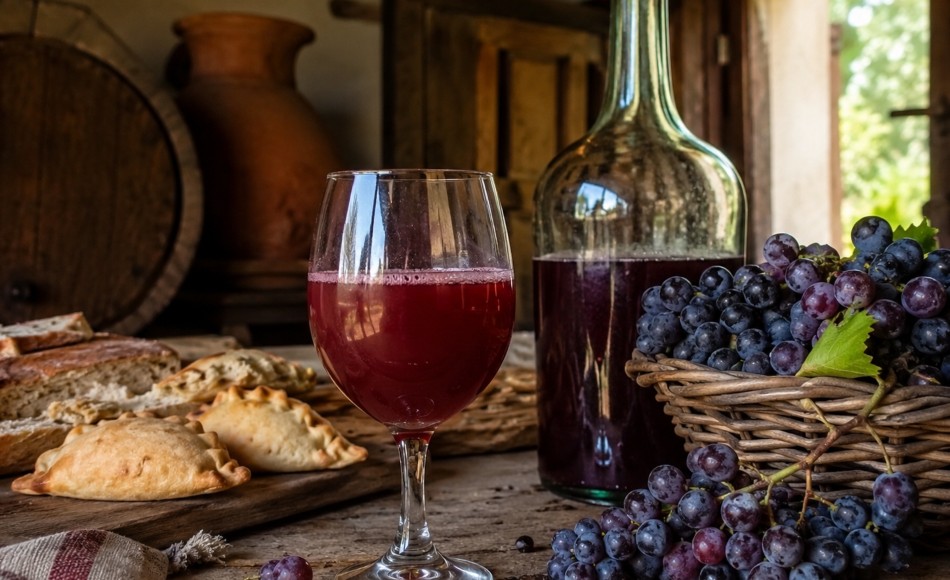
Vino patero is the oldest and most traditional wine of the Argentine Northwest, dating back to the 16th century with the arrival of European colonizers in the region.
Its name comes from the production technique: the must is obtained by treading the grapes with bare feet instead of using machinery, in a process considered one of the most natural that exists.
Print
Argentine Foot Trodden Craft Wine
- Prep Time: 168 hours
- Total Time: 168 hours
- Yield: 20 glasses
- Category: Beverage
- Cuisine: Argentine
Ingredients
- 20 kg of Criolla grapes, unwashed (about 44 lb)
Preparation
- Select the grapes, choose well-ripened bunches of Criolla grapes, unwashed, to preserve the natural yeasts on the skin.
- Load the vat, pour the grapes into a large wooden vat or container set aside for treading.
- Tread the grapes, with clean feet, gently tread the grapes to release the must without crushing the seeds.
- Extract the must, let the resulting juice drain into a container below.
- Ferment, let the must ferment in a cool place for about a week, until little residual sugar remains.
- Rack, once fermented, transfer the wine to another container, separating it from the sediment.
- Bottle, bottle the vino patero, which is characterized by very little aging.
- Serve, serve cool, in glasses, alongside regional dishes.
Tips for getting it right
- Not washing the grapes preserves the natural yeasts on the skin, essential for spontaneous fermentation.
- Treading gently, without crushing the seeds, keeps the wine from picking up unwanted bitter flavors.
- Fermenting in a cool place helps control the process and achieve vino patero’s characteristic profile.
- Vino patero is drunk young, with little aging, unlike industrial wines.
Traditional variations
- Vino patero wines are usually pink or claret-colored, made mainly from Criolla grapes.
- In the Calchaquí Valleys there are around 50 registered producers who keep this tradition alive.
How to serve
Vino patero is served cool, alongside regional dishes of the Argentine Northwest.
It’s an emblem of the provinces of La Rioja, Catamarca, and the Calchaquí Valleys, crafted on small family farms.
Recommended sides
- Northern-style empanadas
- Locro
- Roasted kid goat
Did you know?
The name “patero” comes from the technique of treading the grapes with bare feet to extract the must, instead of using machinery.
This wine emerged in the 16th century with the arrival of European colonizers in northwestern Argentina, and it’s still crafted by hand today.
Frequently Asked Questions
The name refers to the production technique: the must is obtained by treading the grapes with bare feet, instead of using machinery.
Not washing them preserves the natural yeasts present on the grape skin, which are what kick off spontaneous fermentation.
It's characteristic of the Argentine Northwest, especially La Rioja, Catamarca, and the Calchaquí Valleys.
Vino patero has very little aging time and is made in a completely handmade way, without machinery, unlike industrial processes.