Aragonese migas are one of the most cherished recipes of rural Aragón, born from the need to use up the stale bread left over in the homes of shepherds and farm laborers. Made from torn bread sautéed in olive oil with garlic, pork belly and chorizo, and finished with a touch of paprika, this dish became the daily sustenance of those working the fields through Aragón's cold winters.
Today migas remain a beloved family gathering dish, especially during the colder months, and it's common to cook a big batch to share straight from the skillet. Its crisp exterior and tender interior, paired with the sweet contrast of the grapes traditionally served alongside, make it a dish that captures the essence of Spanish resourceful, no-waste cooking.
Print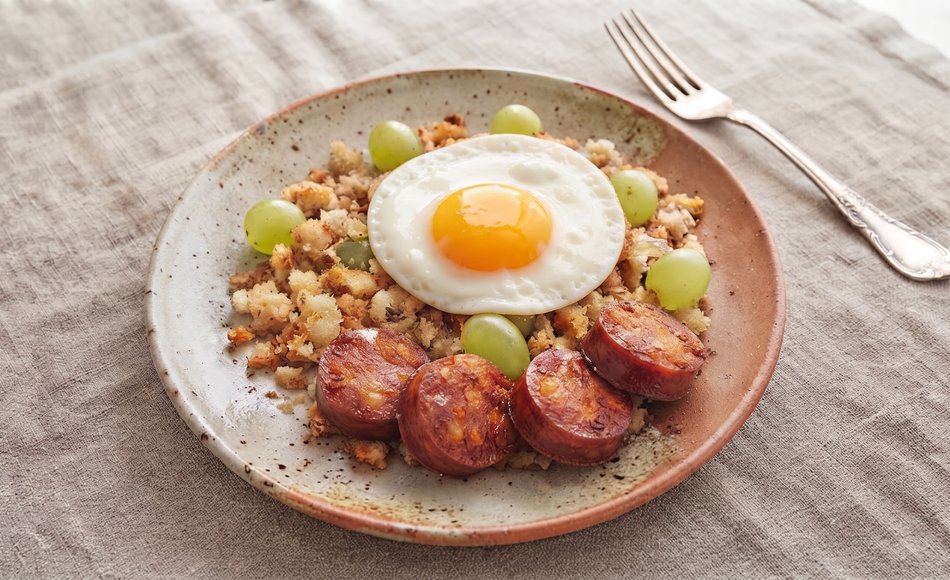
Aragonese Migas
- Prep Time: 15 minutes
- Cook Time: 35 minutes
- Total Time: 8 hours 50 minutes
- Yield: 4 servings
- Category: Main Course
- Cuisine: Spanish
Ingredients
- 400 g of stale bread from the day before (8-10 slices of baguette-style bread)
- 200 ml of water (3/4 cup plus 2 tablespoons)
- Salt, to taste
- 100 ml of extra virgin olive oil (just under 1/2 cup)
- 4 cloves of garlic, unpeeled (4 large cloves)
- 150 g of cured pork belly, diced (1 cup)
- 150 g of chorizo, sliced (1 medium chorizo link)
- 10 g of smoked sweet paprika (2 teaspoons)
- 300 g of black grapes, for serving (2 cups)
Preparation
- Prep the bread, tear the stale bread into bite-sized, irregular pieces, place them in a large bowl, and sprinkle them with the water mixed with a pinch of salt, tossing with your hands so the bread moistens evenly without turning soggy. Cover the bowl with a damp cloth and let it rest overnight (at least 8 hours) in a cool spot so the bread fully absorbs the moisture and is ready to crumble.
- Crumble the rested bread, the next day, break apart any clumps with your fingers until you have loose, even crumbs with no compact, wet chunks left.
- Sauté the garlic and cured meats, heat the olive oil in a large skillet or paella pan over medium heat, brown the whole unpeeled garlic cloves until golden and remove them, then in the same oil brown the diced pork belly and chorizo until they render their fat and turn slightly crisp.
- Stir in the paprika, pull the skillet off the heat for a few seconds, add the smoked sweet paprika, and stir quickly so it toasts without scorching, since it turns bitter if it overheats.
- Fry the bread crumbs, return the skillet to medium-low heat, add the bread crumbs, and stir constantly for 15 to 20 minutes, scraping them off the bottom with a wooden spatula until they turn golden, loose, and crisp on the outside.
- Serve right away, portion the piping-hot migas onto individual plates and top with the black grapes and pieces of the golden garlic.
Practical Tips
- The bread must be truly stale; fresh bread is much harder to crumble properly and can turn gummy.
- Keep stirring the crumbs constantly while frying so they brown evenly and don't stick to the bottom.
- Use a wide skillet so the crumbs sit in a thin layer and crisp up on all sides.
- Always add the paprika off direct heat, since it burns and turns bitter very easily.
Traditional variations
- In some parts of Aragón, chunks of blood sausage are added alongside the chorizo and pork belly.
- In areas around Teruel, it's common to also fry an egg per person to serve with the migas.
How to Serve
Aragonese migas are served piping hot, straight from the skillet, traditionally on earthenware plates or directly from the pan so they stay warm as long as possible.
Recommended sides
- Black grapes
- Fried egg
- Hot chocolate
- Grilled sausage or sardines
Origin and Tradition
Migas began as food for Aragonese shepherds and farmhands, who needed to make use of the stale bread they carried during long days out in the fields. Over time, this humble dish moved from sheep pens and country roads into family kitchens, and today it's common to find it served at winter festivals, where it's cooked in large skillets or cauldrons to share among many people.
Frequently Asked Questions
Because the bread needs to rest for at least 8 hours in a cool spot, covered with a damp cloth, so it fully absorbs the salted water and is ready to crumble without clumps.
Because the smoked sweet paprika burns and turns bitter very easily if toasted directly over the heat, so the skillet is pulled off the heat for a few seconds before adding it.
The whole unpeeled garlic cloves are browned in the oil to flavor it and then removed, to be served alongside the migas at the end.
They should be stirred constantly for 15 to 20 minutes, scraping them off the bottom with a wooden spatula, until they turn golden, loose, and crisp on the outside.
According to the recipe, they can be served with fried egg, hot chocolate, or grilled sausage or sardines.