In the heart of Ourense province, in Galicia, the small town of Cea has been known for generations as "the bread village." This is where Pan de Cea is made: a large, rustic loaf with a thick, dark, deeply crackled crust wrapped around a moist, elastic crumb full of big, irregular holes.
It's made with only four ingredients — wheat flour, water, salt, and a natural sourdough starter, with no commercial yeast added — through a long, slow fermentation process. This traditional method, passed down from the region's old wood-fired stone ovens, made Pan de Cea the first bread in Spain to earn Protected Geographical Indication (PGI) status, back in 2004.
For Galician families, this bread is far more than a side item: it's part of the daily table and of local celebrations, bought fresh every week from Cea's traditional bakeries, and for centuries it has fed pilgrims walking the stretch of the Camino de Santiago that passes through this wheat-growing region.
Print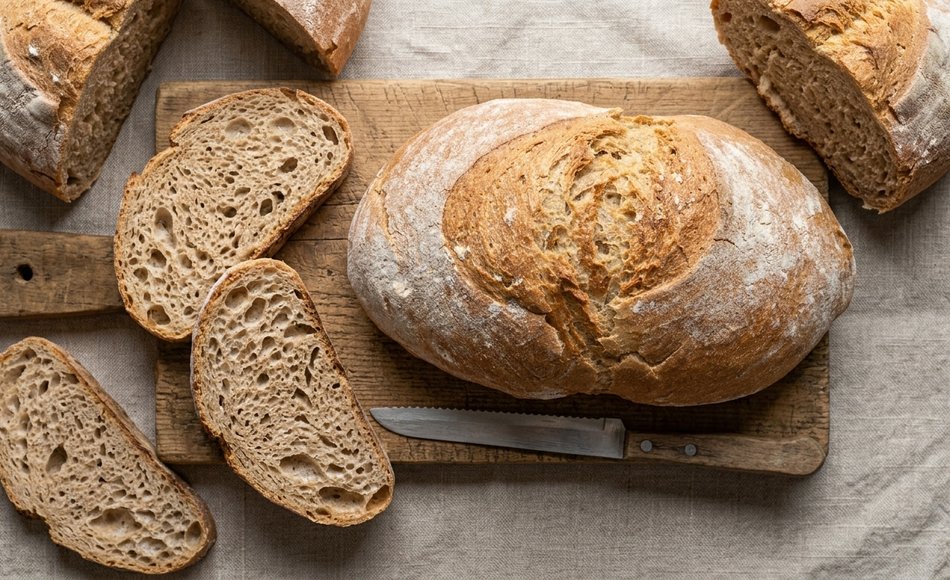
Pan de Cea (Traditional Galician Bread)
- Prep Time: 40 minutes
- Cook Time: 55 minutes
- Total Time: 6 hours 35 minutes
- Yield: 10 servings
- Category: Bread
- Cuisine: Galician
Ingredients
- 800 g of bread flour (strong wheat flour) (6 3/4 cups)
- 480 ml of lukewarm water (2 cups)
- 300 g of active wheat sourdough starter, previously fed (1 1/4 cups)
- 18 g of salt (1 heaping tablespoon)
- 50 g of bread flour, for dusting the counter and cloth (1/3 cup)
- Flour and water for feeding the sourdough starter
Preparation
- Activate the sourdough starter, the night or morning before, feed it with flour and water until it's bubbly and has doubled in size; it's ready when a spoonful floats on the surface of a glass of water.
- Mix the dough, in a large bowl combine the bread flour, lukewarm water, and active starter, and work them together with your hands or a dough scraper until you get a wet dough with no dry flour lumps.
- Add the salt and knead, dissolve the salt in a little of the same water, work it into the dough with a series of folds until it feels more elastic, though it will still be quite sticky given its high hydration.
- Let it bulk ferment, cover the bowl and let the dough rest at room temperature for 4 to 6 hours, giving it a couple of folds during the first hour to strengthen the gluten, until it has clearly increased in volume.
- Shape the loaf, turn the dough out onto a well-floured surface, gently deflate it, and shape it into a tight, elongated loaf with rounded ends, the traditional shape of Pan de Cea.
- Let it proof a second time, place the shaped loaf seam-side up on a heavily floured cloth or in an oval proofing basket, cover it, and let it rest for 1 to 2 more hours, until it has almost doubled in size.
- Cut the fenda, bake with steam, and cool, preheat the oven to its highest setting with a steam source, flip the loaf right-side up, make one deep crosswise cut across the center of the top (the "fenda"), slide it into the oven, and bake for about 55 minutes, until the crust is deeply golden and sounds hollow when tapped, and let it cool completely on a wire rack before slicing.
Practical Tips
- If you don't have an active starter, begin feeding one at least 5 days before baking; it's ready when it has doubled in size and a spoonful floats in water.
- Handle the dough with wet hands instead of adding extra flour — this is naturally a very hydrated, sticky dough, and that's exactly what gives it its open, airy crumb.
- Adjust fermentation times to your kitchen's temperature; on cold days the dough will need more hours to double than on warm days.
- Create steam during the first few minutes of baking, using a pan of hot water or a few ice cubes at the bottom of the oven, to get this bread's signature thick, crackly crust.
Traditional variations
- Under the PGI regulation, Pan de Cea is an elongated loaf with rounded ends and a crosswise cut across the center, the "fenda," which divides it into two domed halves; you can also bake a round loaf at home, but that is not the protected shape.
The Traditional Way to Serve It
Pan de Cea is served in thick slices, and it's often torn by hand rather than cut with a knife, in keeping with the rustic, irregular texture of its crumb.
It's typically left on the table throughout the whole meal so everyone can help themselves as many times as they like, the same way it's done with caldo gallego or empanada gallega.
Recommended sides
- Caldo gallego (Galician broth)
- Galician cheeses like San Simón da Costa or tetilla
- Galician cured meats, such as lacón or chorizo
- Extra virgin olive oil, for dipping
Origin and Tradition
In 2004, Pan de Cea became the first bread in all of Spain to receive Protected Geographical Indication (PGI) status, a designation that requires bakers to follow traditional recipes, ovens, and processes in order to use the name.
The area around Cea has always been fertile wheat-growing land, and its old stone ovens, fired with oak or chestnut wood, made this bread famous long before any official seal existed; several family bakeries in the village still bake it exactly the way their ancestors did generations ago.
Frequently Asked Questions
It's ready when it's bubbly and has doubled in size; to confirm, drop a spoonful into a glass of water and it should float on the surface.
This is naturally a very hydrated dough, and that stickiness is exactly what gives it its open crumb, so it's best to handle it with wet hands instead of adding extra flour.
It's the deep crosswise cut made across the center of the top of the loaf before baking, and it's what divides the bread into two domed halves, as required by the PGI regulation.
It's ready when the crust is deeply golden and sounds hollow when tapped; after that, let it cool completely on a wire rack before slicing.
Steam during the first few minutes of baking, created with a pan of hot water or a few ice cubes at the bottom of the oven, is what produces this bread's signature thick, crackly crust.