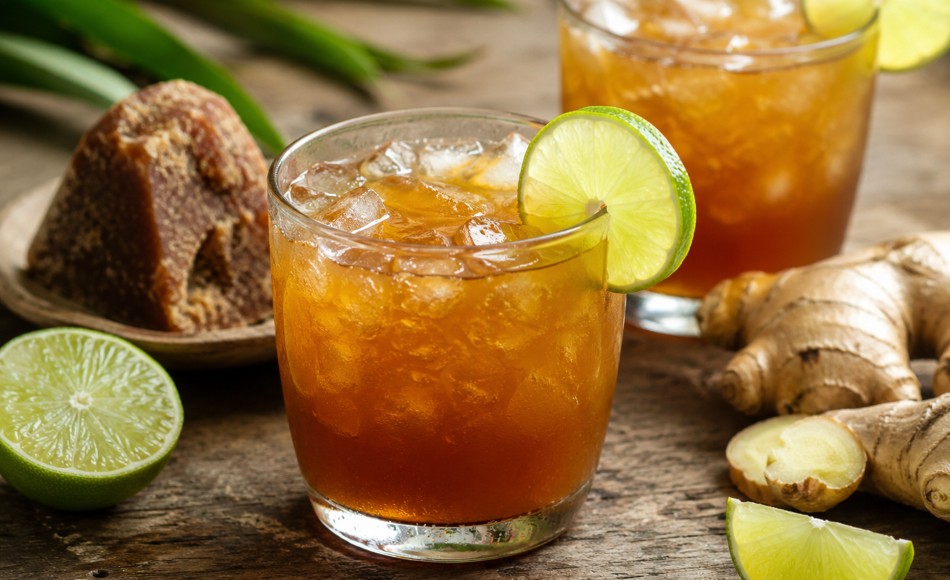
Agua de sapo is a refreshing drink from Costa Rica’s Caribbean coast, made with tapa de dulce, ginger, and lemon juice, with Afro-Caribbean influence.
Its curious name (literally “toad water”) has nothing to do with frogs: it refers to the dark, cloudy orange color the drink takes on, not its contents.
Print
Costa Rican Ginger and Cane Sugar Drink
- Prep Time: 15 minutes
- Cook Time: 15 minutes
- Total Time: 3 hours 15 minutes
- Yield: 8 servings
- Category: Beverage
- Cuisine: Costa Rican
Ingredients
- 1 tapa de dulce (unrefined cane sugar, about 340 g / 12 oz)
- 4 liters of water (2 for the syrup and 2 for diluting)
- 140 g (5 oz) of fresh ginger, peeled and grated
- Juice of 5 limes
- Ice, to taste
Preparation
- Make the syrup, melt the tapa de dulce in 2 liters of water over medium heat, stirring occasionally until fully dissolved.
- Add the ginger, stir in the grated ginger and let it simmer gently for 5 to 10 minutes.
- Strain, strain the syrup into a large container and add the other 2 liters of water.
- Chill, let it cool completely in the fridge, about 3 hours.
- Add lime, stir in the juice of the 5 limes right before serving.
- Serve, serve very cold, over ice.
Tips for getting it right
- Grating the ginger instead of chopping it helps extract more flavor during cooking.
- Straining the syrup before chilling gives a smoother drink, free of ginger fiber.
- The lemon juice is added at the end to preserve its freshness and acidity.
- Agua de sapo is traditionally served very cold, over plenty of ice.
Traditional variations
- The touch of ginger was introduced by Jamaican workers who arrived to build the railroad in the late 19th century.
- The ratio of ginger to lemon can be adjusted to taste, milder or more intense.
How to serve
Agua de sapo is served very cold, in a glass, over ice.
It’s a typical drink of Limón province, on Costa Rica’s Caribbean coast.
Recommended sides
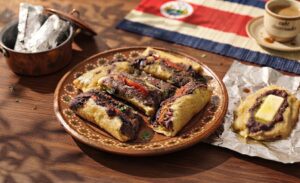
- Patí limonense
- Pan bon
Did you know?
The name “agua de sapo” (toad water) refers to the drink’s dark, cloudy orange color, not its actual contents.
The touch of ginger was introduced by Jamaican railroad workers in the late 19th century, part of Limón’s Afro-Caribbean heritage.
Frequently Asked Questions
The name is folkloric and refers to the drink's dark, cloudy orange color, with no real connection to frogs or toads.
The combination of tapa de dulce, fresh ginger, and lemon juice gives this drink its characteristic sweet, spicy, and tangy flavor.
It originates from Limón province, on Costa Rica's Caribbean coast, with influence from Jamaican immigrants.
Yes, the amount of ginger can be increased or decreased depending on whether you prefer a milder or spicier drink.