Chumbeque Iqueño

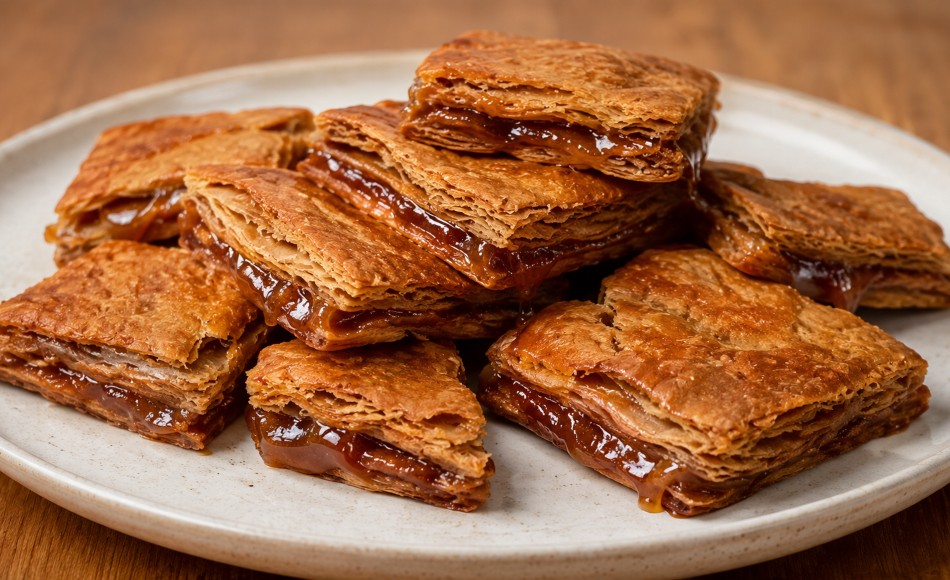
Ica-style Peruvian chumbeque is a regional version of this layered sweet, made with a firm dough of flour, fat, egg yolks, sesame seeds, and spices, held together with a thick aromatic syrup. Although chumbeque is strongly associated with Peru’s northern coast, especially Piura, in Ica it is also appreciated as a fair-style, bakery-style, and family sweet, adapted to local tastes for rich syrups and long-lasting desserts.

Its texture resembles a compact turrón: baked layers of firm but tender dough soaked and joined with syrup until they form a sweet, aromatic, energy-rich block. Traditional Peruvian chumbeque is known for containing flour, fat, egg yolks, sesame seeds, cinnamon, salt, sugar, and layers of fruit or chancaca syrup.

Print
clock clock iconcutlery cutlery iconflag flag iconfolder folder iconinstagram instagram iconpinterest pinterest iconfacebook facebook iconprint print iconsquares squares iconheart heart iconheart solid heart solid icon
Chumbeque Iqueño Receta

Peruvian Ica Chumbeque

5 Stars 4 Stars 3 Stars 2 Stars 1 Star No reviews
  • Author: Recetas123
  • Prep Time: 35 minutes
  • Cook Time: 40 minutes
  • Total Time: 1 hour 15 minutes
  • Yield: 12
  • Category: Dessert
  • Cuisine: Peruvian

Ingredients

  • 500 g all-purpose flour (4 cups)
  • 180 g vegetable shortening or lard (¾ cup)
  • 4 egg yolks
  • 80 ml warm water (⅓ cup)
  • 60 g white sugar (¼ cup)
  • 20 g toasted sesame seeds (2 tablespoons)
  • 5 g anise seeds (1 teaspoon)
  • 4 g ground cinnamon (1 teaspoon)
  • 3 g baking soda (½ teaspoon)
  • 3 g salt (½ teaspoon)


For the syrup:

  • 350 g chopped chancaca or panela (1½ cups)
  • 200 g brown sugar (1 cup)
  • 250 ml water (1 cup)
  • 2 cinnamon sticks
  • 4 whole cloves
  • 1 strip orange peel
  • 15 ml lemon juice (1 tablespoon)
  • 30 g toasted sesame seeds for finishing (3 tablespoons)

Preparation

  1. Prepare the syrup, place the chancaca, brown sugar, water, cinnamon sticks, cloves, and orange peel in a pot. Cook over medium heat until the chancaca fully dissolves, then let it simmer gently until you get a thick, glossy, slightly sticky syrup. Add the lemon juice at the end, strain the syrup, and keep it warm.
  2. Make the dough, mix the flour with the sugar, cinnamon, baking soda, salt, anise seeds, and toasted sesame seeds. Add the shortening or lard and rub it into the dry ingredients with your hands until the mixture looks sandy. Add the egg yolks and pour in the warm water gradually, only until a firm, compact, workable dough forms.
  3. Rest and roll, cover the dough and let it rest for 20 minutes so it relaxes. Divide it into 3 equal pieces and roll each one on a lightly floured surface into even rectangular sheets about 5 mm thick.
  4. Bake the layers, place the dough sheets on greased baking trays or trays lined with parchment paper. Prick the surface with a fork so they do not puff too much, and bake at 180 °C for 15 to 18 minutes, until firm, lightly golden, and toasted in aroma. Let them cool slightly before assembling.
  5. Assemble the chumbeque, place one dough layer on a tray and cover it with warm syrup. Add the second layer, press gently, and cover again with syrup. Repeat with the third layer and pour the remaining syrup over the top, letting it soak in without breaking the dough.
  6. Press and finish, sprinkle toasted sesame seeds on top, cover the chumbeque with parchment paper, and place a light board or flat tray over it for 1 hour to compact the layers. Once firm, cut it into rectangles or squares using a lightly greased knife.

Chef’s Tips

  • Do not overwork the dough after adding the water. It should be compact, but not elastic like bread dough.
  • The syrup should be thick but pourable. If it is too thin, it will oversoften the layers; if it is too hard, it will not spread properly.
  • Let the assembled chumbeque rest before cutting. This allows the syrup to bind the layers and helps the sweet hold its shape.
  • Use toasted sesame seeds, not raw ones. Their aroma is an important part of traditional chumbeque flavor.

Traditional Variations

  • Some Peruvian versions use orange, fig, or other fruit syrups in addition to chancaca syrup, since traditional chumbeque allows for aromatic syrup layers.
  • Northern preparations are known for a more orange-colored dough and a soft texture that keeps well for several days.
  • In Ica, many homemade versions favor a darker chancaca and orange syrup, closer to the taste of traditional criollo fair sweets.

Traditional Serving Style

Ica-style chumbeque is served in squares or rectangles, usually at room temperature, once the syrup has settled and the layers have compacted. It is served in small portions because it is rich, energetic, and very aromatic. It is enjoyed as an afternoon sweet or fair-style treat, paired with Peruvian drip coffee, tea, emoliente, or a warm herbal infusion. It can also be served on a criollo dessert table with tejas, chocotejas, frejol colado, camotillos, or alfajores.

Recommended Pairings

  • Peruvian drip coffee
  • Hot tea
  • Emoliente
  • Anise or lemongrass infusion
  • Ica-style tejas
  • Chocotejas
  • Frejol colado

Origin and Tradition

Chumbeque is a long-standing Peruvian sweet described as a layered turrón made with flour, egg yolks, sesame seeds, fat, cinnamon, anise, and syrup. In Peru, it has a strong identity on the northern coast, especially Piura, where it has traditionally been sold as a popular sweet with good keeping qualities. The Ica focus in this recipe reflects a regional adaptation within Peruvian confectionery, where chancaca syrups, citrus aromas, and compact sweets coexist with emblematic preparations such as tejas, chocotejas, and frejol colado.

Frequently Asked Questions

Leave a Reply

Recipe rating 5 Stars 4 Stars 3 Stars 2 Stars 1 Star