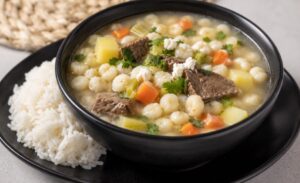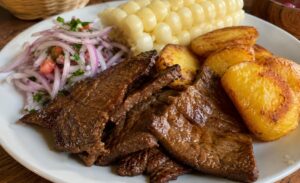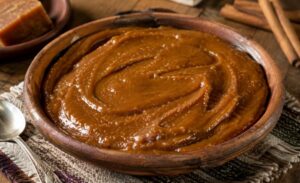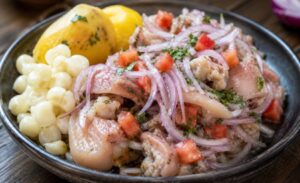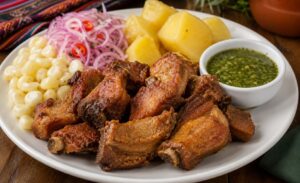
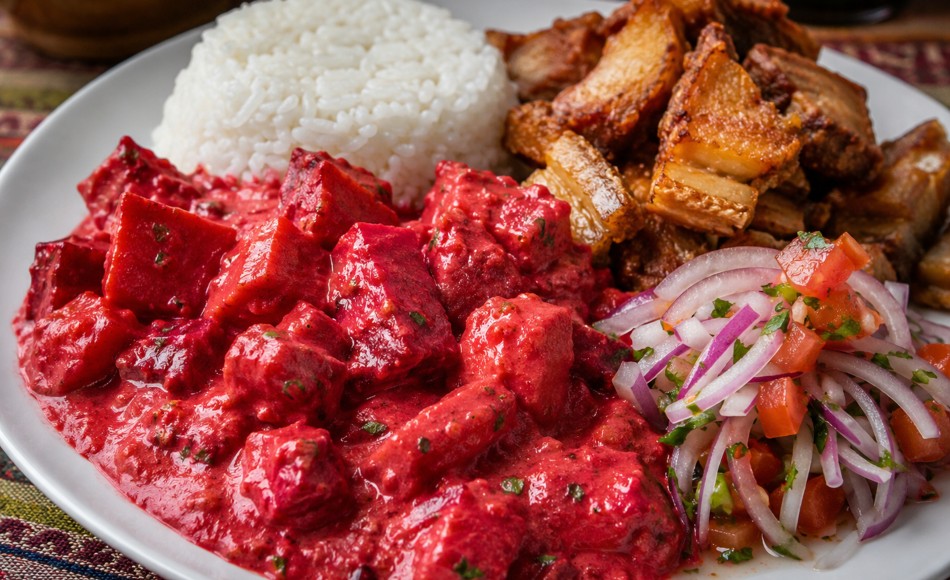
Puca picante is one of Ayacucho’s most representative dishes. Its name comes from the Quechua word puka, meaning “red,” referring to the dish’s distinctive color from beets and ají panca chile paste. You make it with potatoes, toasted ground peanuts, a chile-based seasoning, and mint, then traditionally serve it with pork chicharrón, fluffy white rice, and Peruvian onion salad.
It is closely linked to Ayacucho celebrations and family cooking. The combination of soft potatoes, creamy peanuts, beets, and crisp pork creates a deeply flavored dish with unmistakable regional identity.
Print
Peruvian Puca Picante
- Prep Time: 30 minutes
- Cook Time: 55 minutes
- Total Time: 1 hour 25 minutes
- Yield: 6
- Category: Main Course
- Cuisine: Peruvian
Ingredients
- 1 kg white potatoes or Yukon Gold potatoes, peeled and cut into medium cubes
- 250 g cooked beets, peeled and blended (2 medium beets)
- 180 g red onion, finely chopped (1 large onion)
- 20 g garlic, minced or blended (4 cloves)
- 60 g ají panca paste (4 tablespoons)
- 120 g roasted peanuts, finely ground (1 cup)
- 40 ml vegetable oil (3 tablespoons)
- 750 ml pork stock or hot water (3 cups)
- 5 g ground cumin (1 teaspoon)
- 3 g ground black pepper (½ teaspoon)
- 10 g salt (2 teaspoons), or to taste
- 15 g fresh mint, chopped (3 tablespoons)
For the pork chicharrón and serving
- 700 g pork belly with skin, cut into medium pieces
- 250 ml water (1 cup)
- 5 g salt (1 teaspoon)
- 300 g cooked white rice (2 cups)
- 150 g red onion, thinly sliced (1 medium onion)
- 120 g tomato, cut into wedges (1 large tomato)
- 30 ml lime juice (2 tablespoons)
- 10 g fresh cilantro, chopped (2 tablespoons)
Preparation
- Cook and brown the pork, place the pork belly in a heavy pot with the water and salt. Cook over medium heat until most of the water evaporates and the pork starts releasing its fat. Reduce the heat to medium-low and brown the pieces for 15 to 20 minutes, until their edges are crisp and the skin is golden. Remove and set aside.
- Make the seasoning base, heat the oil in a wide pot and cook the onion until translucent. Add the garlic, ají panca paste, cumin, and black pepper. Cook for 6 to 8 minutes, stirring often, until the mixture is thick, glossy, and fragrant.
- Add the beets and peanuts, stir the blended beets and ground peanuts into the seasoning base. Mix well and cook over low heat for 3 minutes, until the mixture becomes evenly red and lightly creamy.
- Cook the potatoes, add the potatoes and pour in the hot stock. Stir gently, partially cover the pot, and cook over medium-low heat for 20 to 25 minutes, until the potatoes are tender and the sauce has thickened. Stir occasionally to keep the peanuts from sticking to the bottom.
- Finish the stew, stir in the chopped mint during the final 3 minutes of cooking. Taste and adjust the salt. The puca picante should be thick, with potatoes that remain whole or just begin to soften at the edges, coated in a rich red sauce.
- Make the salad and serve, combine the onion, tomato, lime juice, and cilantro. Serve the puca picante hot with white rice, pork chicharrón, and a portion of Peruvian onion salad. Potatoes, peanuts, beets, pork chicharrón, and onion salad reflect the traditional Ayacucho-style presentation.
Chef’s Tips
- Use unsalted roasted peanuts and grind them finely so they thicken the stew without making it grainy.
- Blend the cooked beets with a little stock so they mix smoothly into the seasoning base.
- Do not boil the stew aggressively after adding the peanuts, since they can stick to the pot and affect the flavor.
- Cut the potatoes into medium cubes so they absorb color and flavor without falling apart.
- Add the chicharrón only when serving so it stays crisp against the thick sauce.
Traditional Variations
The best-known Ayacucho version combines potatoes, roasted ground peanuts, beets, and ají panca, and is served with rice, pork chicharrón, and Peruvian onion salad. In earlier preparations, ayrampo, an Andean fruit, gave the dish its red color; today, beets and ají panca are commonly used instead.
A guinea pig version of puca picante also exists, although the pork chicharrón presentation remains one of the most recognized versions in contemporary Ayacucho cooking.
How to Serve It
Serve puca picante hot in a deep or wide plate. Place a portion of fluffy white rice on one side, spoon the potato stew into the center, and set the pork chicharrón on top or alongside it. Finish with freshly made Peruvian onion salad.
Pair it with chicha morada, chicha de jora, or a cold barley drink.
Recommended Side Dishes
- Fluffy white rice
- Pork chicharrón
- Peruvian onion, tomato, and lime salad
- Peruvian ground chile
- Chicha morada
- Chicha de jora
Origin and Tradition
Puca picante is considered one of Ayacucho’s most emblematic dishes. Its red color and Andean ingredients explain its strong connection to regional culinary identity. In Ayacucho, it is recognized as a preparation served at celebrations and family gatherings.
The recipe brings together products of major importance in Andean cooking: potatoes, peanuts, aromatic herbs, and chiles. The modern use of beets preserves the color that older preparations obtained from ayrampo.
Frequently Asked Questions
“Puca” or “puka” means “red” in Quechua. The name describes the dish’s intense red color, now mainly created with beets and ají panca paste. The stew is not necessarily very spicy; the chile mostly brings color, fragrance, and depth, while the heat level depends on how much chile you use.
In the traditional Ayacucho presentation, pork chicharrón is commonly served alongside the potato stew rather than fully cooked into the sauce. This helps it stay golden and crisp. You can place it on top of the puca picante or serve it beside the rice and Peruvian onion salad.
Beets are the most practical ingredient for achieving the distinctive red color in the modern recipe. Use them cooked and blended, as shown here. Avoid replacing them with tomatoes, since both the flavor and final color would change too much. Traditionally, the color was associated with ayrampo, but beets are now the most common substitute.
Add hot stock gradually and stir often while it cooks. Ground peanuts and potatoes naturally thicken the sauce, especially as it rests. If the stew becomes too dense, add 60 to 120 ml of hot stock and stir gently until it returns to a creamy consistency without becoming soupy.