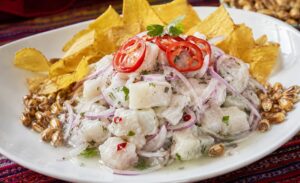

Cusco-style pork chicharrón is a classic preparation from Cusco’s popular cuisine. You make it with pork, especially pork belly or meaty ribs, simmered first until tender and then browned in its own rendered fat. The result is juicy meat with crisp edges and a rich pork flavor.
In Cusco, it is commonly served with mote corn, boiled potatoes, chuño, or a fresh Peruvian onion salad with lime. You often find it in markets, picanterías, and family gatherings, where it is enjoyed freshly cooked with Peruvian chile sauce.
Print
Cusco Pork Chicharrón
- Prep Time: 25 minutes
- Cook Time: 1 hour
- Total Time: 1 hour 25 minutes
- Yield: 6
- Category: Main Course
- Cuisine: Peruvian
Ingredients
- 1.2 kg pork belly with skin, cut into medium pieces
- 500 ml water (2 cups)
- 20 g garlic, minced or blended (4 cloves)
- 8 g salt (1½ teaspoons)
- 4 g ground cumin (1 teaspoon)
- 3 g ground black pepper (½ teaspoon)
- 5 g dried oregano (1 teaspoon)
- 300 g cooked mote corn (2 cups)
- 700 g boiled yellow potatoes or native potatoes
- 150 g red onion, thinly sliced (1 medium onion)
- 120 g tomato, cut into wedges (1 large tomato)
- 30 ml lime juice (2 tablespoons)
- 15 g fresh cilantro, chopped (3 tablespoons)
- 3 g salt for the salad (½ teaspoon)
- 100 g toasted Andean cancha corn (¾ cup), optional
- 80 g rocoto chile sauce or Peruvian ground chile (⅓ cup), for serving
Preparation
- Season the pork, combine the pork belly with the garlic, salt, cumin, black pepper, and oregano. Rub the seasoning well into every piece and let it rest for 20 minutes.
- Simmer the meat, place the seasoned pork in a heavy pot and add the water. Partially cover the pot and cook over medium heat for 35 to 40 minutes, until most of the water has evaporated and the pork is tender.
- Brown the chicharrón, once the pork begins releasing its own fat, reduce the heat to medium-low and stir the pieces often. Cook for 15 to 20 minutes, until the skin is golden, the edges are crisp, and the meat remains juicy.
- Make the Peruvian onion salad, combine the onion, tomato, lime juice, cilantro, and salt. Let it rest for 5 minutes so the onion softens slightly.
- Serve the dish, arrange the hot chicharrón on a platter with mote corn, boiled potatoes, onion salad, and toasted cancha corn, if using. Serve rocoto sauce on the side so everyone can adjust the heat.
Chef’s Tips
- Use pork belly with skin for the traditional combination of tender meat, flavorful fat, and crisp skin.
- Do not add oil; the pork should brown in the fat it naturally releases.
- Keep the heat moderate during the final stage so the skin does not burn before becoming crisp.
- Drain off some rendered fat if there is too much, but keep a small amount to preserve the meat’s juiciness.
- Serve the chicharrón right after browning, because the skin becomes less crisp as it sits.
Traditional Variations
In some Cusco households, chicharrón is made with pork ribs or a combination of pork belly and ribs. Depending on the season and family custom, it may also be served with white chuño, boiled corn, or cassava.
In markets and picanterías, it is especially common to serve it with mote corn, potatoes, and spicy rocoto sauce. Some versions include mint or huacatay in the salad, although onion, lime, tomato, and cilantro remain a widely used combination.
How to Serve It
Serve Cusco-style pork chicharrón very hot, just after browning, on a large shared platter or individual plates. Pair the pork with boiled potatoes, mote corn, and Peruvian onion salad to balance its rich flavor.
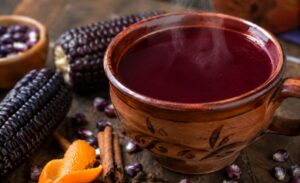
Serve it with chicha de jora, chicha morada, or a cold barley drink. Peruvian ground chile or rocoto sauce is also traditionally offered at the table.
Recommended Side Dishes
- Cooked mote corn
- Boiled yellow potatoes or native potatoes
- Boiled white chuño
- Peruvian onion, tomato, and lime salad
- Toasted Andean cancha corn
- Rocoto chile sauce
- Chicha de jora or chicha morada
A Note on Tradition
Pork chicharrón is part of popular food traditions across Peru, but in Cusco it takes on a distinct character through its Andean accompaniments. Mote corn, native potatoes, and rocoto chile connect the dish to the everyday ingredients of the highlands.
Simmering the pork in water before browning it in its own fat creates a tender, flavorful texture without needing to deep-fry it from the beginning. For that reason, Cusco-style chicharrón is often juicier than pork dishes fried directly in oil.
Frequently Asked Questions
Pork belly with skin is one of the best choices because it combines meat, fat, and skin, all essential for a tender and crisp result. You can also use meaty pork ribs or a mixture of both cuts. Avoid very lean cuts because they do not release enough fat to brown properly in the traditional way.
The first cooking stage tenderizes the meat before it begins to brown. Once the water evaporates, the pork cooks in the fat it has rendered, developing a golden, crisp surface without drying out inside. This method also helps the seasonings absorb into the meat.
Cook the pork over medium heat until tender before starting the browning stage. Do not rush this step with high heat, because the meat can become tough. During the final frying stage, stir the pieces often and remove them once the skin is golden and the edges are crisp.
You can season the pork the night before and refrigerate it in a covered container. However, it is best to cook and brown it shortly before serving. To reheat it, use an uncovered skillet over medium heat to restore some of its crisp texture.