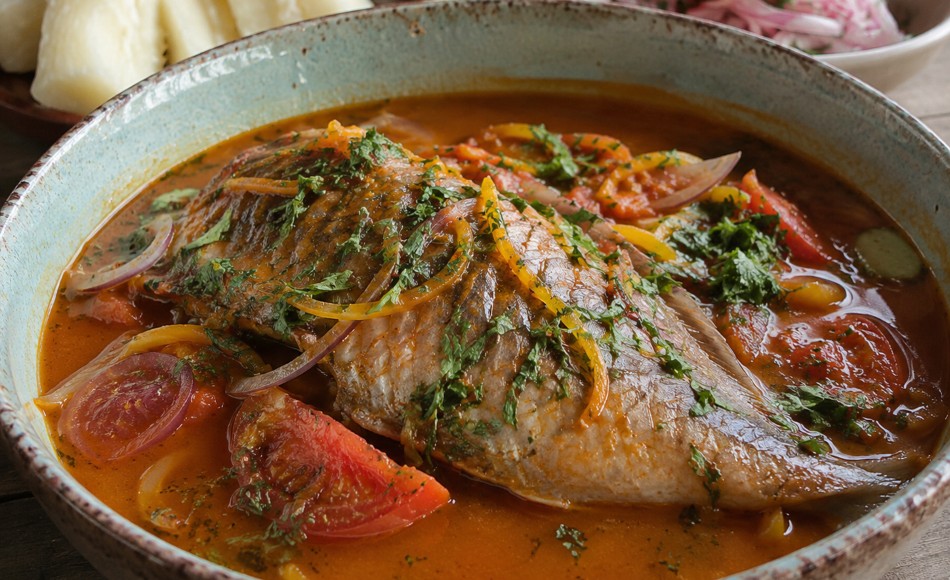
Fish sudado is one of the most beloved seafood stews from Peru’s coast. It is made with firm fish gently cooked in an aromatic broth of onion, tomato, peppers, chicha de jora, and cilantro. The result is a light but deeply flavorful sauce that is meant to be served piping hot.
On Peru’s northern coast, especially in Piura, sudado de cachema is one of the most traditional versions. It is commonly served with boiled cassava and salsa criolla, while chicha de jora gives the dish its characteristic fermented flavor.
Print
Peruvian Fish Sudado
- Prep Time: 20 minutes
- Cook Time: 20 minutes
- Total Time: 40 minutes
- Yield: 4
- Category: Main Course
- Cuisine: Peruvian
Ingredients
- 1 kg firm white fish, cut into 4 skin-on portions, such as cachema, grouper, cabrilla, or corvina
- 8 g salt (1 ¼ teaspoons), divided
- 3 g ground black pepper (1 teaspoon)
- 30 ml fresh lime juice (2 tablespoons)
- 250 g red onion, cut into thick wedges (2 medium onions)
- 300 g tomatoes, cut into wedges (3 medium tomatoes)
- 20 g garlic paste (1 ½ tablespoons)
- 30 g ají panca paste (2 tablespoons)
- 40 g fresh ají amarillo, cut into strips (2 medium peppers)
- 240 ml unsweetened chicha de jora (1 cup)
- 240 ml fish stock or hot water (1 cup)
- 15 g fresh cilantro, chopped (½ cup)
- 30 ml vegetable oil (2 tablespoons)
- 1 whole rocoto pepper, optional
Preparation
- Season the fish, place the fish portions in a shallow dish and season them with 5 g of salt, black pepper, and lime juice. Let them rest for 15 minutes while you prepare the remaining ingredients.
- Build the flavor base, heat the oil in a wide pot and cook the onion for 3 minutes. Add the garlic paste, ají panca paste, and ají amarillo. Cook for 2 minutes, stirring until the seasoning mixture becomes fragrant.
- Make the broth, add the tomatoes, chicha de jora, fish stock, and half of the cilantro. Stir gently, add the remaining salt, and simmer for 5 minutes so the tomatoes soften and flavor the liquid.
- Cook the fish, arrange the fish portions over the broth, add the whole rocoto if using, and cover the pot. Cook over medium heat for 8 to 10 minutes without stirring too much, until the fish is opaque and flakes easily with a fork.
- Finish and serve, sprinkle with the remaining cilantro, turn off the heat, and let the sudado rest covered for 3 minutes. Serve immediately with plenty of broth, onion, tomato, and one piece of fish per plate.
Chef’s tips
- Choose very fresh, firm-fleshed fish so the portions hold their shape while cooking.
- Do not overcook the fish; it should stay moist and tender rather than dry.
- Keep the pot covered while the fish cooks so the steam concentrates the flavors of the cilantro, peppers, and chicha.
- Use unsweetened chicha de jora. Its fermented flavor is essential to a traditional northern-style sudado.
Traditional variations
In Piura, the best-known version uses whole or portioned cachema, chicha de jora, tomato, onion, ají panca, and green pepper. Grouper or cabrilla may also be used depending on local availability. In other coastal areas, home cooks may use extra cilantro or replace part of the chicha with fish stock.
How to serve
Serve fish sudado as soon as it is ready, in a deep bowl with plenty of broth. On the northern coast, it is traditionally paired with boiled cassava and salsa criolla. White rice is also a great accompaniment for soaking up the sauce.
Recommended accompaniments
- Boiled cassava.
- Salsa criolla with red onion, lime, and chili.
- Fluffy white rice.
- Unsweetened chicha de jora.
Did you know?
The name sudado refers to the covered cooking method, in which fish cooks over a moist base of vegetables and seasonings. The steam concentrates the flavors and gently cooks the fish in its own juices, without frying it or boiling it aggressively.
In Piura, cachema sudado reflects a coastal cooking tradition built around fresh fish, chicha de jora, and cassava—simple ingredients with a strong regional identity.
Frequently Asked Questions
Use fresh, firm fish such as cachema, grouper, cabrilla, corvina, or bonito. Thick portions with skin and bone are ideal because they hold together better while cooking and add more flavor to the broth. Avoid delicate fillets that can break apart too quickly in the sauce.
Yes, you can use extra fish stock, but the result will be less traditional. Chicha de jora adds gentle acidity and a distinctive fermented flavor, particularly in northern Peruvian versions. Do not replace it with beer or sweet beverages, since they would significantly change the dish.
Use thick fish portions, cook over medium heat, and avoid stirring once the fish is in the pot. Instead of using a spoon, gently shake the pot by its handles if needed. Cook only until the fish turns opaque and flakes easily with a fork.
You can reheat it once over low heat, but it is best enjoyed freshly made. Fish is delicate and can become dry or fall apart if it boils for too long a second time. Add a splash of hot stock before reheating if the sauce has thickened.