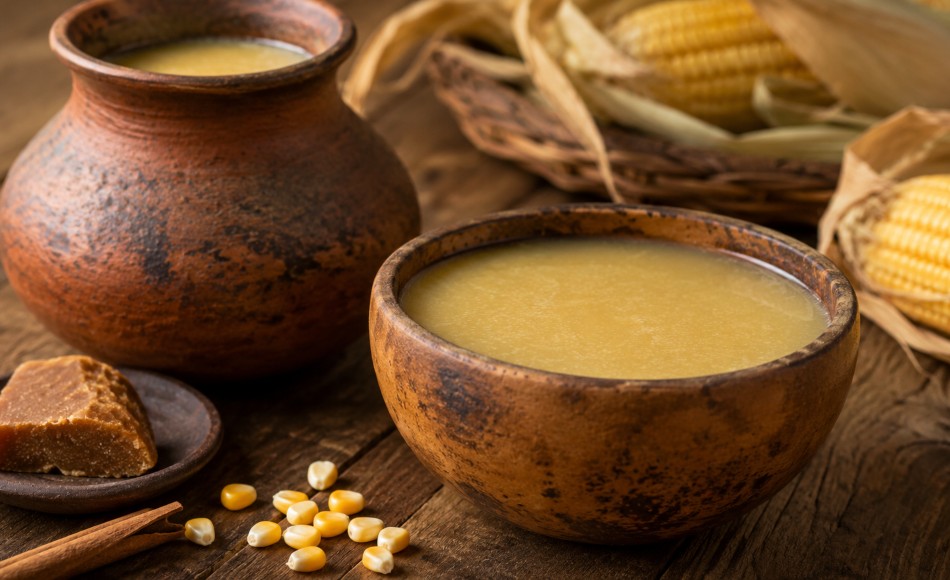
Colombian corn chicha is an ancestral drink from the Cundiboyacense highlands, especially connected to Muisca tradition and Bogotá’s popular food culture. It is made with cooked corn, panela and water, then naturally fermented to develop a bold aroma, a mildly tangy flavor and a variable alcohol content.
For centuries, chicha was served at community gatherings, celebrations and rituals. Today, it remains a meaningful symbol of Colombian culinary identity, particularly in traditional areas of Bogotá, where it is often served in gourds or clay cups.
Print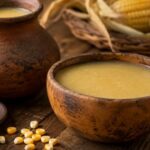
Colombian Corn Chicha
- Prep Time: 20 minutes
- Cook Time: 1 hour 45 minutes
- Total Time: 2 hours 5 minutes
- Yield: 10
- Category: Beverage
- Cuisine: Colombian
Ingredients
- 500 g dried yellow corn (about 2 ½ cups)
- 4 liters water (16 cups)
- 350 g grated panela (about 1 ¾ cups)
- 1 cinnamon stick, about 3 inches long
- 4 whole cloves
- 15 g peeled fresh ginger (1 tablespoon grated)
Preparation
- Soak the corn, rinse the corn several times and place it in a large bowl with enough cold water to cover it. Let it soak for 12 hours, then drain it before cooking so the kernels soften evenly.
- Cook the corn, place the soaked corn in a large pot with 3 liters of water and cook over medium heat for about 1 hour and 30 minutes, until very tender. Reserve 500 ml of the cooking liquid and let the corn cool slightly.
- Grind the base, blend or grind the cooked corn with part of the reserved cooking liquid until you have a thick, slightly textured mixture. Return the mixture to the pot.
- Sweeten the chicha, add the panela, cinnamon, cloves, ginger and remaining liter of water. Cook over low heat for 15 minutes, stirring until the panela dissolves completely. Let the mixture cool fully.
- Ferment the drink, transfer the mixture to a very clean clay, glass or stainless-steel container. Cover it with a clean cloth and leave it at room temperature for 24 to 72 hours. Taste it after 24 hours: the longer it rests, the tangier and stronger it will become.
- Strain and serve, remove the spices, strain the chicha if you prefer a lighter texture and refrigerate it before serving. Serve chilled and consume within 3 days.
Chef’s Tips
- Use dried field corn rather than sweet corn for the most traditional flavor and texture.
- Do not tightly seal the container while the chicha ferments, as gases naturally develop.
- Discard the drink if you notice mold, a rotten smell or a slimy texture.
- Refrigerate the chicha after 24 hours for a milder, sweeter result.
Traditional Variations
In Cundinamarca and Boyacá, some versions ferment for several days and develop a stronger profile. Certain traditional preparations include pineapple peel for aroma and fermentation support, although the corn-and-panela version remains the best-known Colombian style.
Traditional Serving Style
Serve chicha well chilled in gourds, clay cups or small glasses. It is traditionally enjoyed during casual gatherings, visits to historic neighborhoods and popular celebrations. Pair it with Colombian empanadas, corn arepas or traditional baked snacks.
Recommended Pairings
- Colombian empanadas
- Corn arepas
- Almojábanas
- Pandebonos
- Fresh curd cheese with panela syrup
A Bit of History
Chicha was an important drink among the Muisca peoples of Colombia’s Andean region. Corn fermentation was connected with social gatherings, offerings and community ceremonies. During the colonial period, it also became an everyday drink for many people in Bogotá.
Frequently Asked Questions
Let it ferment for 24 to 72 hours, depending on your preferred flavor. After 24 hours, it will taste sweeter and milder. After 48 to 72 hours, it develops a more tangy, intense character and may contain more alcohol. Warmer temperatures speed up fermentation.
Yes. Natural fermentation can create alcohol, although the amount varies according to resting time, temperature and available sugar. Chicha fermented for one day is usually mild, while chicha fermented for several days can have a stronger flavor and a more noticeable alcoholic effect.
Yes. You can chill the cooked corn-and-panela drink and serve it without fermenting it. It will still be flavorful and refreshing, but it will not have the tangy, fermented character associated with traditional Colombian chicha.