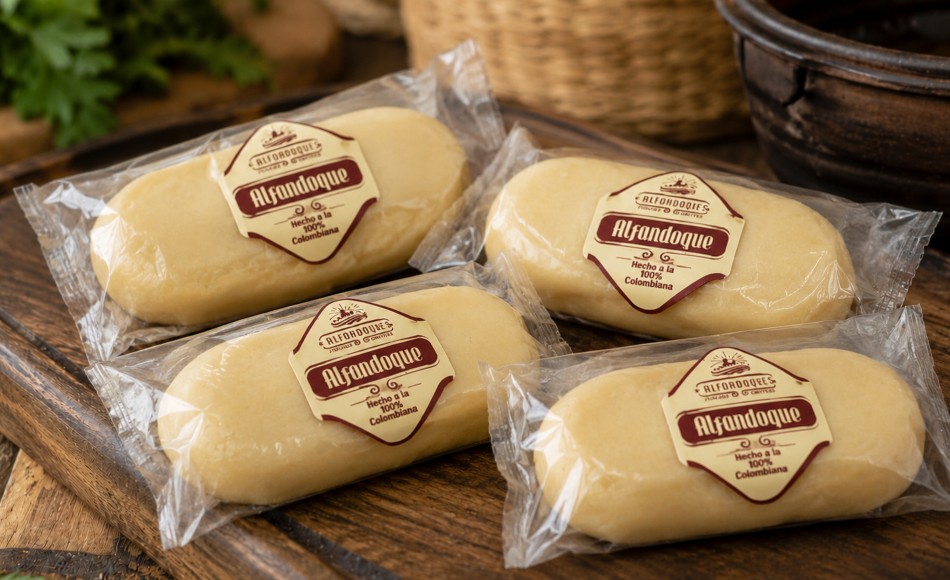
Alfandoque is a traditional Colombian candy especially associated with Boyacá. It is handmade from panela, an unrefined cane sugar, cooked into a thick syrup and then pulled until it becomes lighter in color, firm, and slightly brittle. In Belén, Boyacá, this sweet is part of a longstanding family and artisan tradition.
The best-known Boyacá-style version is flavored with anise and shaped into bars, ropes, or bite-size pieces. It is a classic market, fair, and afternoon sweet closely tied to the region’s panela-making culture.
Print
Colombian Alfandoque Candy
- Prep Time: 20 minutes
- Cook Time: 40 minutes
- Total Time: 1 hour
- Yield: 16
- Category: Dessert
- Cuisine: Colombian
Ingredients
- 500 g panela, grated or broken into small pieces
- 375 ml water (1 ½ cups)
- 5 ml anise extract (1 teaspoon)
- 5 ml fresh lemon juice (1 teaspoon)
- 2 g ground cinnamon (1 teaspoon)
- 10 ml vegetable oil (2 teaspoons), for greasing
Preparation
- Make the syrup, add the panela and water to a heavy-bottomed saucepan. Cook over medium heat, stirring until the panela has fully dissolved and the mixture is smooth.
- Cook the candy, add the anise extract, lemon juice, and cinnamon. Cook for 25 to 30 minutes, until the syrup becomes thick. Test it by dropping a little into cold water; it should form a firm but still pliable ball.
- Cool it carefully, pour the syrup onto a smooth, lightly greased surface and let it rest for 4 to 6 minutes. Wait until it is warm enough to handle cautiously; hot sugar can cause burns, so ask an adult to help with this step.
- Pull the alfandoque, lightly grease your hands and gather the warm candy. Pull it into a long rope, fold it in half, and pull again. Repeat for 8 to 10 minutes, until it becomes lighter, more opaque, and glossy.
- Shape and cool, stretch the candy into ropes about 2 cm thick and cut them into 6 cm bars. Let them cool completely on parchment paper before storing or serving.
Chef’s Tips
- Use good-quality panela with no excess moisture for the cleanest flavor.
- Do not overcook the syrup, or the candy will become too hard to pull.
- Work the candy while it is warm and flexible; once it cools too much, it may crack.
- Use only a thin coating of oil on your hands to prevent sticking.
Traditional Variations
In Boyacá, alfandoque is often flavored with anise. Some artisan versions include toasted peanuts or shredded coconut, although the simple pulled panela-and-anise version remains one of the most representative.
How to Serve
Serve alfandoque at room temperature as bars or small pieces on a dessert tray. It is traditionally eaten on its own as an afternoon sweet or artisan treat.
Pair it with Colombian coffee, hot chocolate, or cold milk.
Recommended Accompaniments
- Colombian coffee
- Hot chocolate
- Cold milk
- Herbal tea
Did You Know?
The repeated pulling technique transforms dark panela syrup into a lighter and more opaque candy. By stretching and folding the mixture, you incorporate air and create alfandoque’s characteristic texture, similar to a firm pulled taffy.
Frequently Asked Questions
They are closely related sweets because both begin with panela syrup or sugar syrup that is pulled and worked by hand. In Colombia, the name can change by region. Boyacá-style alfandoque is often firmer and commonly flavored with anise, while melcocha may be softer and chewier.
Use the cold-water test. Drop a little syrup into a glass of cold water; it should form a firm, moldable ball when pressed between your fingers. If it dissolves, cook it longer. If it turns hard and brittle immediately, it has cooked too long.
Once completely cool, store alfandoque in an airtight container for 5 to 7 days in a cool, dry place. Separate the pieces with parchment paper so they do not stick together and keep them away from humidity.