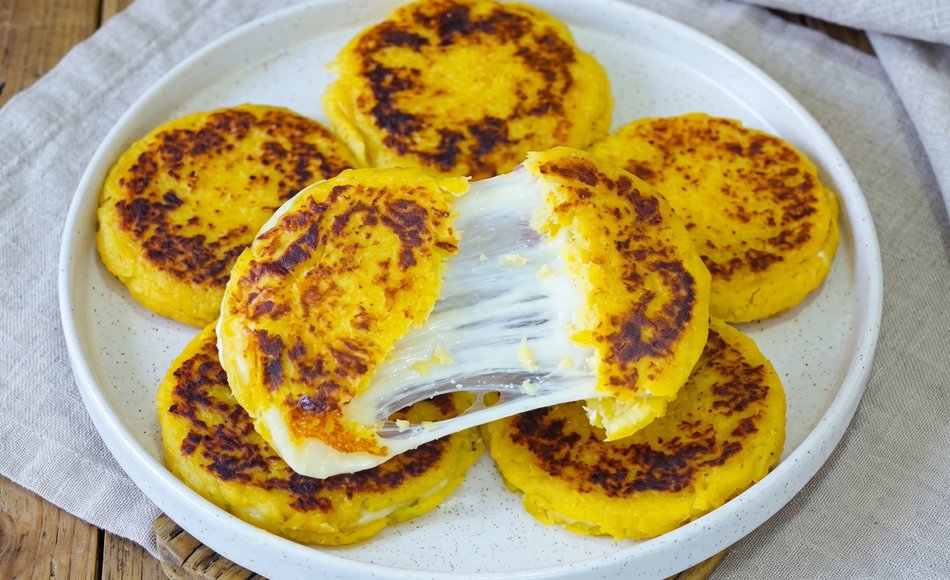
Colombian plantain arepa is a homemade preparation made mainly with ripe plantain, cheese, and a small amount of corn flour to give the dough structure. It is simple, lightly sweet and savory, and closely connected to home cooking in regions where plantains are part of everyday meals.
Although it does not have one single national version like other Colombian arepas, the most representative style is made with cooked ripe plantain, filled or mixed with white cheese, and cooked on a griddle or skillet until golden outside and soft inside. It is commonly served for breakfast, as an afternoon snack, or as a side dish for home-style meals.
Print
Colombian Plantain Arepa
- Prep Time: 20 minutes
- Cook Time: 35 minutes
- Total Time: 55 minutes
- Yield: 6
- Category: Main Course
- Cuisine: Colombian
Ingredients
- 900 g peeled ripe plantains (4 medium plantains)
- 1.5 liters water (6 cups)
- 6 g salt (1 teaspoon)
- 100 g precooked white or yellow corn flour (¾ cup)
- 30 g butter (2 tablespoons)
- 220 g grated queso costeño or grated fresh farmer’s cheese (2 cups)
- 15 ml vegetable oil for cooking (1 tablespoon)
Preparation
- Cook the plantains, cut the ripe plantains into large pieces and place them in a pot with the water and half of the salt. Cook over medium heat for 18 to 25 minutes, until very soft and easy to pierce with a fork.
- Make the dough, drain the plantains very well and mash them while still hot until you get a thick purée. Add the butter, corn flour, and the remaining salt. Mix and knead until the dough becomes soft, moist, and easy to handle. Let it rest for 5 minutes so the corn flour absorbs the plantain moisture.
- Shape the arepas, divide the dough into 6 equal portions. Take each portion, flatten it slightly, place grated cheese in the center, and close the dough around the filling. Then flatten it carefully into an arepa about 1 cm thick.
- Cook the arepas, heat a comal, griddle, or heavy skillet over medium heat and lightly grease the surface with the oil. Cook the arepas for 4 to 5 minutes per side, until golden, firm, and lightly crisp outside. Turn them carefully so the cheese filling stays inside.
- Serve hot, remove the arepas once they are golden outside and the cheese inside has softened. Serve them right away to enjoy the contrast between the sweet ripe plantain and the salty cheese.
Chef’s tips
Use very ripe plantains with dark yellow skin and black spots. They will give the arepas better natural sweetness and a softer texture.
Drain the plantains very well after cooking. If they hold too much water, the dough becomes sticky and difficult to shape.
Add the corn flour gradually if the plantains are very moist. The dough should be soft, but not runny or crumbly.
If you use queso costeño, adjust the salt carefully because this cheese is usually saltier than fresh farmer’s cheese.
Traditional variations
In some Colombian homes, all the cheese is mixed directly into the dough instead of being used as a filling.
There are also thinner versions that brown quickly in a skillet, and thicker versions served as a more filling snack.
In areas where plantains are eaten often, some families make these arepas with roasted ripe plantain instead of boiled plantain, giving the dough a more concentrated flavor and a lightly caramelized aroma.
Traditional way to serve
Serve Colombian plantain arepas hot, straight from the griddle or skillet. They should be golden on the outside, tender inside, and filled with lightly softened cheese.
For breakfast, pair them with coffee with milk, hot chocolate, or aguapanela. As a snack, they go well with butter, extra fresh cheese, or suero costeño. They can also be served with eggs or grilled meats.
Recommended pairings
- Coffee with milk
- Hot chocolate
- Aguapanela
- Suero costeño
- Fresh cheese
- Butter
- Colombian-style scrambled eggs
- Grilled beef
Food fact
Ripe plantain plays an important role in Colombian cooking. It appears fried, roasted, baked, in soups, and in homemade doughs. This arepa shows how many Colombian families adapt the idea of the arepa to everyday ingredients beyond corn, keeping the preparation simple, affordable, and deeply connected to home cooking.
Frequently Asked Questions
The most common version is made with ripe plantain because it brings natural sweetness, softness, and a dough that is easier to shape. Green plantain is starchier, less sweet, and is usually used in other Colombian preparations such as patacones, cayeye, or firmer plantain-based doughs.
Yes, you can make them only with ripe plantain and cheese if the plantain is well drained after cooking. However, a small amount of corn flour helps firm up the dough, makes shaping easier, and prevents the arepas from breaking on the griddle.
Queso costeño works very well because its salty flavor contrasts with the sweetness of ripe plantain. You can also use fresh farmer’s cheese, cuajada, or another fresh white cheese that softens with heat without releasing too much liquid.
They usually stick when the dough is too wet, the skillet is not hot enough, or the cooking surface needs a little more fat. Drain the plantain well, let the dough rest, and cook the arepas over medium heat on a lightly greased heavy skillet.