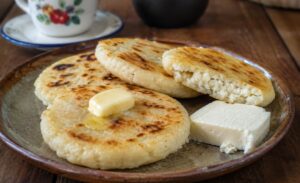
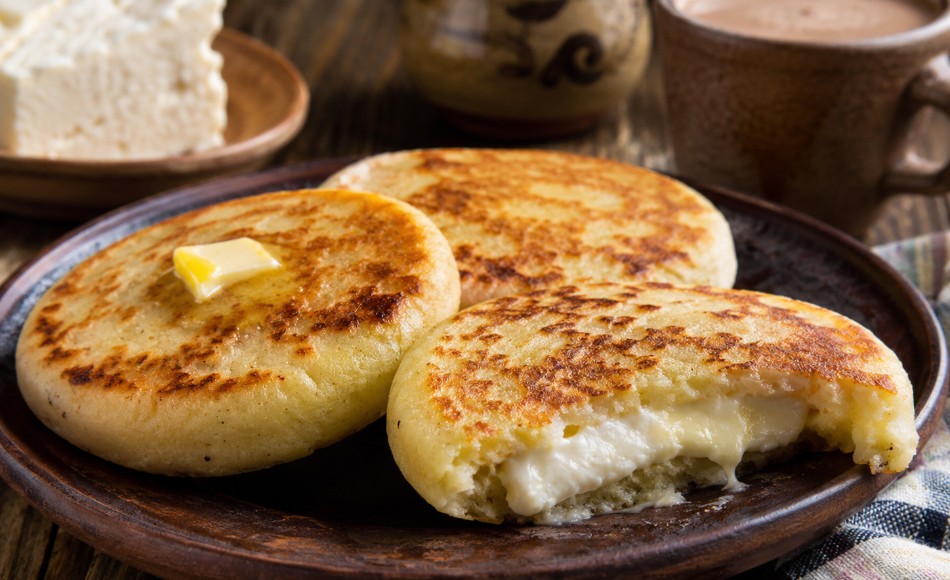
Colombian arepa boyacense is one of the most representative foods from Boyacá, in the Andean region of Colombia. Unlike plainer Colombian arepas, this one is slightly sweet, soft, and filled with cheese or cuajada, which warms into a creamy center.
Traditionally, it is made with cornmeal, a little wheat flour, panela or sugar, milk, butter, and fresh cheese. It is commonly enjoyed for breakfast, as an afternoon snack, in traditional bakeries, markets, and roadside stops in Boyacá, served hot with coffee, hot chocolate, or panela water.
Print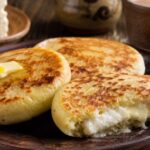
Colombian Boyacense Arepa
- Prep Time: 20 minutes
- Cook Time: 25 minutes
- Total Time: 45 minutes
- Yield: 8
- Category: Main Course
- Cuisine: Colombian
Ingredients
- 300 g white or yellow precooked cornmeal (2½ cups)
- 120 g all-purpose flour (1 cup)
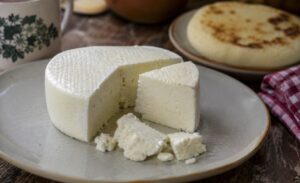
- 250 g crumbled cuajada, campesino cheese, or fresh cheese for the dough (2 cups)
- 250 g cuajada, campesino cheese, or fresh cheese for filling (2 cups)
- 120 g grated panela or sugar (½ cup)
- 360 ml warm milk (1½ cups)
- 60 g melted butter (4 tablespoons)
- 4 g salt (¾ teaspoon)
- 15 g butter for cooking (1 tablespoon)
Preparation
- Make the dough, mix the cornmeal, all-purpose flour, grated panela or sugar, and salt in a large bowl. Add the warm milk little by little while mixing with your hands, until the flours hydrate and form a soft dough.
- Add the cheese and butter, mix in the crumbled cheese and melted butter. Knead for 4 to 5 minutes, until the dough feels flexible, moist, and easy to handle. If it cracks, add 1 or 2 tablespoons of warm milk; if it feels too soft, let it rest for 10 minutes.
- Shape the arepas, divide the dough into 8 equal portions. Take each portion, flatten it slightly, place cheese or cuajada in the center, and close the dough around the filling. Shape thick discs about 10 cm wide and 1.5 cm thick, sealing the edges well.
- Griddle them gently, heat a griddle, heavy skillet, or traditional tiesto over medium-low heat and grease lightly with butter. Place the arepas on the hot surface and cook for 7 to 9 minutes per side, until golden, firm outside, and hot in the center.
- Finish the cooking, lower the heat if they brown too quickly. Arepa boyacense should be toasted outside, soft inside, and filled with warm, creamy cheese without burning.
- Serve hot, bring the arepas to the table freshly made. You can serve them plain or with a little butter on top, although the cheese filling already gives them plenty of flavor and moisture.
Practical Tips
Use cuajada or fresh campesino-style cheese for the closest traditional flavor.
Do not make the dough overly sweet; arepa boyacense should be gently sweet, not dessert-like.
Cook over medium-low heat so the center warms through and the cheese softens without burning the outside.
Seal the edges well after filling so the cheese does not leak out during cooking.
Traditional Variations
In some parts of Boyacá, the dough is made with more panela, giving the arepa a sweeter flavor and a slightly deeper golden color.
Some versions use fresh cuajada instead of campesino cheese, especially in rural and family-style preparations.
In certain homes, the arepas are made thicker and finished in the oven or on a traditional clay griddle, creating a firmer outside and a very soft center.
Traditional Serving Style
Serve arepa boyacense hot, freshly cooked, so the cheese inside stays soft. It is traditionally enjoyed for breakfast or as an afternoon snack with Colombian coffee, hot chocolate, panela water, or masato.
It can also be served as a side for simple meals, although its sweet dough and cheese filling make many people enjoy it on its own.
Recommended Side Dishes
- Hot chocolate
- Colombian coffee
- Panela water
- Masato
- Butter
- Fresh cheese
- Cuajada
Did You Know?
Arepa boyacense reflects the rural cooking of Boyacá, where corn, milk, cuajada, and panela have long been important everyday ingredients. Its flavor brings together sweet and salty notes in a way that is very characteristic of the region.
Along many roads in Boyacá, freshly griddled arepas are a classic stop for travelers, especially when served hot and wrapped to keep their warmth.
Frequently Asked Questions
Arepa boyacense is usually sweeter, thicker, and filled with cheese or cuajada. Unlike paisa arepa, which is thinner and more neutral, this one has a richer dough made with milk, butter, panela or sugar, and cheese.
The most traditional choices are cuajada, campesino cheese, or fresh cheese. These cheeses give a soft texture and a lightly salty flavor that balances the sweetness of the dough. Avoid cheeses that are too greasy or overly salty.
Yes, you can make it with precooked cornmeal, which is practical for home cooking. The most traditional versions may start with ground corn, but precooked cornmeal gives a soft dough that is easy to shape.
It may split if the dough is too dry, the filling is excessive, or the edges are not sealed well. To prevent this, adjust the moisture with warm milk, use a moderate amount of cheese, and cook over medium-low heat without pressing too hard.