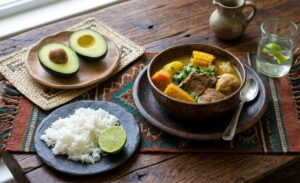
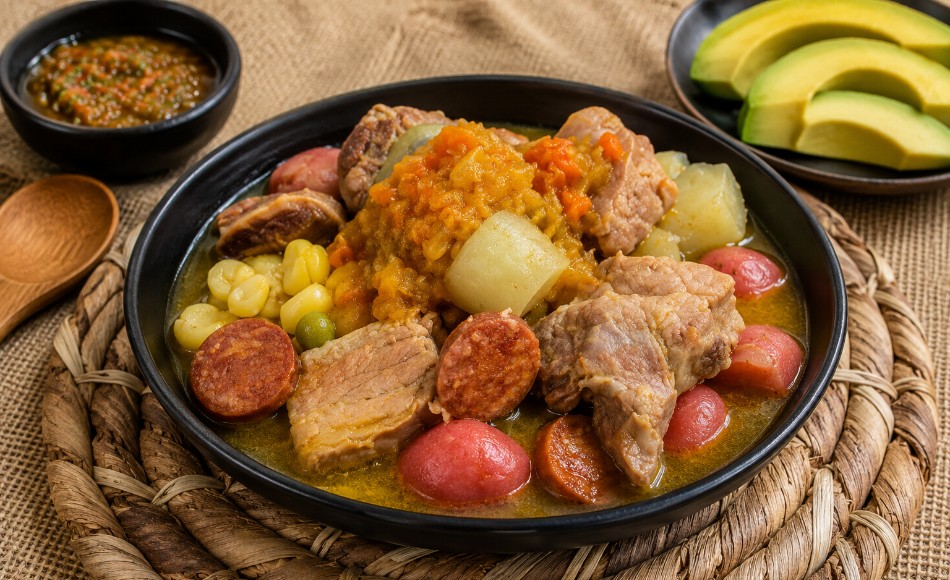
Cocido boyacense is one of the most emblematic dishes of the Boyacá department and of traditional Andean Colombian cuisine. It is known for its abundance of ingredients: several meats, Andean tubers, fava beans, and corn.
Its origin is tied to the Spanish “olla podrida,” adapted in the region with native tubers such as ibia, cubio, and chugua. Today it is a symbol of Boyacá’s culinary identity.
Print
Colombian Cocido Boyacense
- Prep Time: 30 minutes
- Cook Time: 1 hour 10 minutes
- Total Time: 1 hour 20 minutes
- Yield: 6
- Category: Soup
- Cuisine: Colombian
Ingredients
- 450 g meaty beef ribs
- 450 g pork (or bacon), in chunks
- 450 g longaniza (sausage), in pieces
- 230 g fresh fava beans (habas)
- 230 g cleaned ibias (Andean tubers)
- 230 g cleaned cubios (Andean tubers)
- 230 g chuguas (Andean tubers)
- 450 g small potatoes (papa de año or criolla)
- 3 ears of corn, cut into pieces
- 2 tablespoons oil
- ½ cup chopped onion (cebolla cabezona)
- 1 stalk long green onion, chopped
- 3 cloves garlic, minced
- 1 cup warm milk
- Water, just enough to barely cover the ingredients
- 1 bay leaf, thyme, and oregano
- Salt and pepper to taste
- For the hogao: 230 g chopped tomato
- For the hogao: 1 stalk long green onion, in strips
Preparation
- Prepare the fava beans. Wash the fava beans, boil them until you can peel them, and peel them. Meanwhile, cut the chuguas and the ribs into pieces.
- Make the guiso. In a large pot, heat the oil and sauté the onion, long green onion, and garlic with the thyme, bay leaf, oregano, salt, and pepper for about 5 minutes.
- Build and cook the cocido in layers. Add in layers, from what takes longest to cook to what cooks fastest: the chuguas, beef ribs, corn, potatoes, pork, ibias, fava beans, and cubios. Add the milk and just enough water to barely cover the ingredients, bring to a boil, and cook over low heat for 20 to 30 minutes, until the meats are tender.
- Add the longaniza and serve. Place the longaniza on top and cook 20 minutes more. While the longaniza cooks, sauté the tomato and long green onion strips to make the hogao. Serve the cocido with the hogao spooned on top.
Chef’s Tips
Add the ingredients in layers, from the slowest to the fastest cooking, so everything reaches the right point.
Do not overcook the cubios and ibias so they keep their texture.
If you can find artisanal Boyacá longaniza, the result will be more traditional.
Traditional Variations
Some versions add chicken pieces.
Some recipes include peas and green beans.
It is traditionally cooked in a clay pot.
Traditional Serving Style
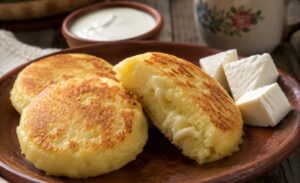
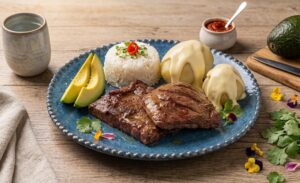
Cocido boyacense is served in a deep plate with hogao on top. By tradition it is accompanied, on a separate plate, by avocado, arepa, or white rice.
Recommended Side Dishes
- Avocado
- Arepa
- White rice
- Hogao
Culinary Notes
Cocido boyacense is considered one of the most complete dishes in Colombian cuisine because of the variety of ingredients it brings together in a single preparation.
The presence of Andean tubers such as ibias, cubios, and chuguas reflects Boyacá’s agricultural heritage; some of them are in danger of disappearing.
Frequently Asked Questions
The main difference is the use of Andean tubers such as ibias, cubios, and chuguas. It also combines several meats and typical vegetables from the Boyacá region.
Yes, although it will be less authentic. They can be hard to find outside Colombia; in that case you can slightly increase the amount of potatoes.
This recipe makes about 6 generous servings.
Yes. Refrigerate it within 2 hours of cooking, eat it within 3 to 4 days, and reheat leftovers to 74 °C (165 °F).
Meaty beef ribs, which add flavor and enrich the broth.