Seafood zarzuela is a Catalan fish and shellfish stew simmered in a sofrito, tomato, and picada sauce, traditionally associated with Barcelona and the Catalan coast. Its name comes from zarzuela, the Spanish theatrical genre that blends singing, dancing, and spoken dialogue — a nod to the varied, colorful mix of seafood the dish brings together in a single pot.
Although it's now made in different regions of Spain, this stew originated in Barcelona's restaurant kitchens in the early twentieth century, and over time it became a fixture of festive meals, especially Christmas Eve dinners and other important family gatherings, where fresh seafood takes center stage on the table.
Print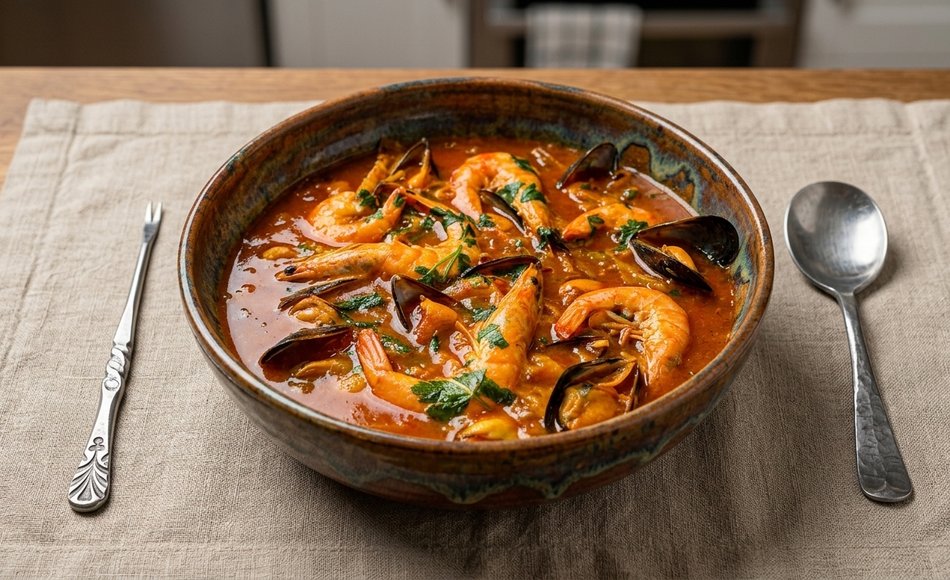
Seafood Zarzuela
- Prep Time: 30 minutes
- Cook Time: 30 minutes
- Total Time: 1 hour
- Yield: 4 servings
- Category: Main Course
- Cuisine: Spanish (Catalan)
Ingredients
- 400 g of cleaned monkfish, cut into chunks (about 14 oz, 1 large fillet)
- 300 g of cleaned squid, sliced into rings (about 10 oz, 2 medium squid)
- 300 g of large shell-on shrimp (about 10 oz, 12 shrimp)
- 500 g of fresh mussels (about 1 lb, roughly 20 mussels)
- 300 g of fresh clams (about 10 oz, 1 medium bag)
- 150 g of finely chopped onion (1 medium onion)
- 400 g of crushed tomatoes (2 large grated tomatoes or 1 can)
- 3 cloves of garlic, minced
- 30 g of toasted almonds (a small handful)
- 1 slice of day-old bread, fried (about 1 oz)
- 100 ml of dry white wine (1/2 cup)
- 50 ml of brandy or cognac (3 tablespoons)
- 300 ml of fish stock (1 1/4 cups)
- 1 pinch of saffron threads (about 10 threads)
- 1 teaspoon of sweet paprika
- 60 ml of extra virgin olive oil (4 tablespoons)
- 1 handful of fresh parsley, chopped
- Salt, to taste
- Black pepper, to taste
- Salted water for purging the clams
Preparation
- Clean the shellfish, scrub and debeard the mussels under cold water, soak the clams in salted water for 20 minutes so they release any sand, and pat the shrimp, squid, and monkfish dry with paper towels.
- Sear the fish and shellfish, heat half the olive oil in a wide pot and brown the shrimp for about two minutes per side; remove them, then sear the monkfish and squid in the same oil until lightly colored on the outside; set everything aside with the shrimp.
- Build the sofrito, add the remaining oil to the same pot, sauté the onion and garlic over medium heat until translucent, stir in the paprika and crushed tomatoes, and cook, stirring, for 10 minutes until the sauce thickens and loses its raw acidity.
- Pound the picada, in a mortar, crush the toasted almonds, fried bread, one garlic clove, and the saffron together with a little parsley until you get a thick paste; set aside.
- Simmer the stew, pour the white wine and brandy over the sofrito and let the alcohol cook off for a couple of minutes, add the fish stock along with the picada dissolved in a bit of stock, and simmer over medium heat for 10 minutes so the flavors come together.
- Add the shellfish and finish cooking, add the monkfish, squid, mussels, and clams to the pot, cover, and cook for 5 to 7 minutes until the mussels and clams open (discard any that stay closed); stir in the shrimp at the very end just to warm through, adjust the salt and pepper, sprinkle with fresh parsley, and serve right away.
Practical Tips
- Don't overcook the shellfish: mussels and clams open within minutes, and monkfish cooks fast — overcooking toughens all of it.
- If you can't find fried bread, use a slice of toasted day-old bread instead; its job is to thicken the sauce, not add a fried flavor.
- Use a wide, shallow pot so the seafood cooks in a single layer and heats evenly.
- Homemade fish stock, made with the shrimp shells and heads, gives far more flavor than a store-bought one.
Traditional variations
- In some parts of the Catalan coast, langoustines or lobster are added for a more festive version typically served at Christmas and New Year's Eve.
- The version known as "zarzuela de pescado y marisco" also adds chunks of white fish, such as hake or grouper, alongside the shellfish.
- Some versions stir a splash of squid ink into the sauce to darken it and deepen its flavor.
Traditional Serving
Seafood zarzuela is served piping hot, straight from the pot or in individual deep bowls, with the sauce covering the seafood well.
It's common to serve it with toasted bread for dipping, since much of the dish's pleasure comes from soaking up the picada and sofrito at the bottom of the pot.
Recommended sides
- Toasted bread with alioli
- White rice
- A glass of dry white wine or cava
Origin and Tradition
The dish's name comes from zarzuela, the Spanish theatrical genre that blends singing, dancing, and spoken dialogue; just as a theatrical zarzuela combines different art forms, this stew brings together a variety of shellfish and fish in a single pot, each contributing its own flavor and texture.
Its creation or popularization is often credited to Barcelona's restaurants in the early twentieth century, where it quickly became a go-to dish for festive meals, especially around Christmas, when fresh seafood takes pride of place on Catalan tables.
Frequently Asked Questions
The recipe says to cover and cook for 5 to 7 minutes until the mussels and clams open, and any that stay closed should be discarded.
It's a thick paste pounded in a mortar from toasted almonds, fried bread, one garlic clove, saffron, and a little parsley, then dissolved in a bit of stock before being added to the stew.
They're soaked in salted water for 20 minutes so they release any sand they may be holding.
They're added at the end just to warm through, since overcooking toughens the shellfish.
A wide, shallow pot, so the seafood cooks in a single layer and heats evenly.