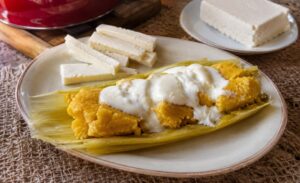
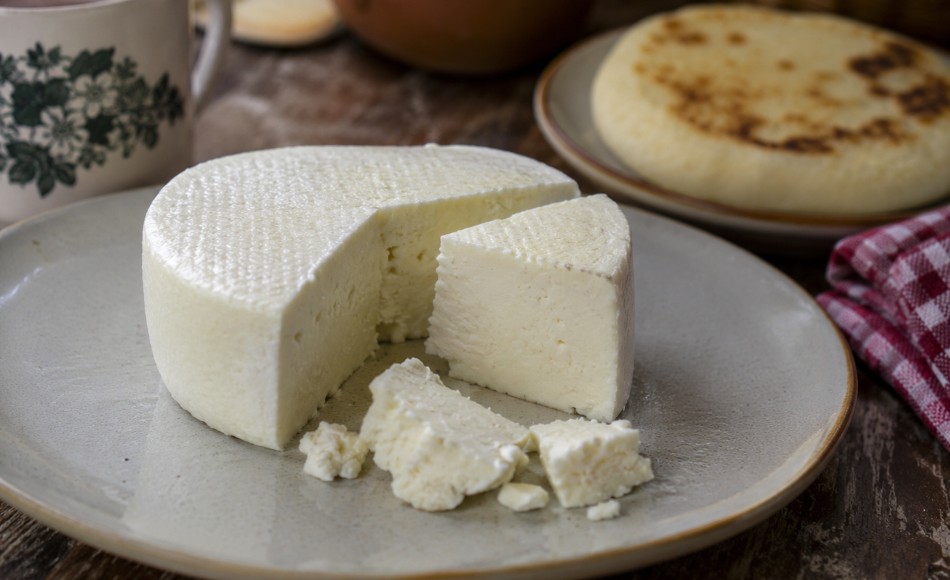
Quesito antioqueño is a soft, lightly salted fresh cheese that is strongly associated with Antioquia and Colombia’s Paisa region. It is enjoyed every day at breakfast or as a snack with corn arepas, aguapanela, hot chocolate, or coffee.
Its tender, moist texture makes it easy to slice, crumble over an arepa, or serve with bread. This homemade version uses pasteurized whole milk and rennet, following the traditional process of setting, cutting, draining, and lightly pressing the curds.
Print
Colombian Antioquian Cheese
- Prep Time: 4 hours 25 minutes
- Cook Time: 10 minutes
- Total Time: 4 hours 35 minutes
- Yield: 8
- Category: Side Dish
- Cuisine: Colombian
Ingredients
- 4 l pasteurized whole milk (16 cups)
- 5 ml food-grade liquid rennet (1 teaspoon)
- 60 ml cold chlorine-free water (1/4 cup)
- 12 g salt (2 teaspoons)
Preparation
- Warm the milk, pour the milk into a large pot and heat it over low heat until it reaches 35 to 37 °C / 95 to 99 °F. It should feel warm, not hot, and should never boil.
- Add the rennet, mix the rennet with the cold water and pour it into the warm milk. Stir gently for 20 seconds, cover the pot, and let it rest for 40 to 50 minutes, until a firm curd forms.
- Cut the curds, make vertical and horizontal cuts with a long, clean knife to create cubes about 2 cm wide. Let the curds rest for 5 minutes so they begin releasing whey.
- Drain and salt, line a large strainer with cheesecloth or clean cotton cloth and place it over a bowl. Transfer the curds to the strainer, add the salt, and stir gently. Let them drain for 20 minutes.
- Shape the cheese, gather the cloth, press the curds gently, and place them in a small mold or perforated container. Let the cheese rest with a light weight on top for 1 hour, until it holds its shape while remaining moist and tender.
- Chill and serve, remove the cheese from the mold and refrigerate it for 2 hours before serving. Enjoy it cold or at room temperature.
Chef’s tips
- Use pasteurized milk only for a safer homemade preparation.
- Do not overheat the milk, as high temperatures can interfere with the rennet.
- Press the cheese gently to preserve the moist texture that defines quesito antioqueño.
- Store it in an airtight container in the refrigerator and enjoy it within 5 days.
Traditional variations
Some households make it with a milder salt level to serve alongside aguapanela or hot chocolate. It is also commonly crumbled over arepas, calentado, arepa migas, or beans.
How to serve
Serve quesito antioqueño sliced or crumbled with warm corn arepas. For a traditional Paisa breakfast, pair it with hot chocolate, aguapanela with milk, or Colombian coffee.
Recommended sides
- Antioquian corn arepas.
- Hot chocolate.
- Aguapanela with milk.
- Fresh bread.
- Colombian coffee.
- Antioquian beans.
Food culture note
Quesito is part of Antioquia’s dairy tradition and is deeply connected to the region’s simple, comforting meals. Served with a hot arepa and a cup of chocolate or aguapanela, it represents one of the most recognizable breakfast combinations in Paisa homes.
Frequently Asked Questions
Use pasteurized whole milk because it provides the fat needed for a soft texture and is safer for homemade cheesemaking. Avoid ultra-pasteurized milk when possible, because it can create weaker curds and yield less cheese.
You will not achieve the traditional texture without rennet. You can curdle milk with lemon juice or vinegar to make a similar fresh cheese, but it will be more crumbly and tangy. Rennet creates a softer, more elastic curd.
Quesito can become dry if you press the curds too firmly or leave them draining for too long. For a moister texture, use a light weight, follow the pressing time, and remove the cheese while it still feels tender when gently pressed.
Yes. You can use the whey in bread doughs, arepa dough, soups, or smoothies. Keep it refrigerated in a clean container and use it within 3 days.