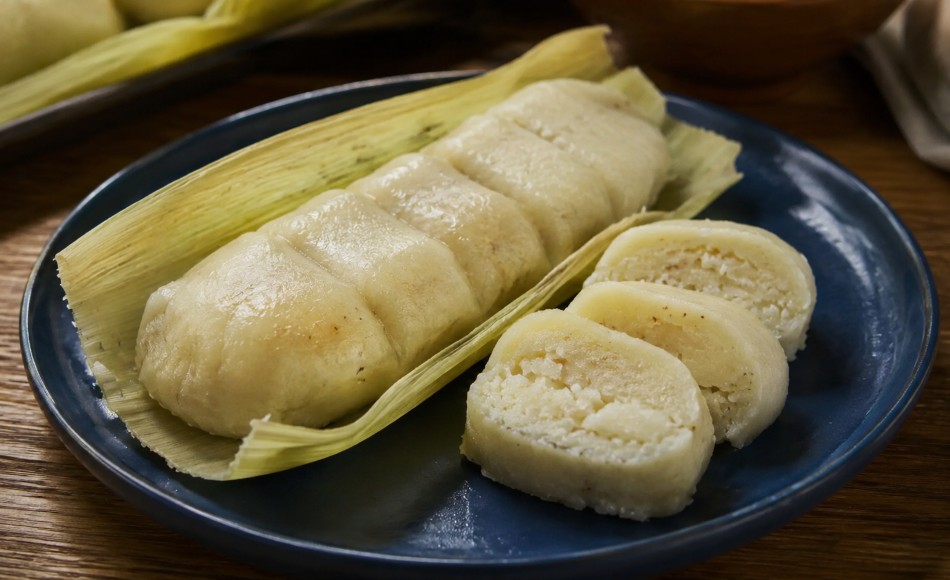
Colombian bollo de angelito is a traditional sweet preparation from Colombia’s Caribbean coast, especially associated with family kitchens in coastal towns and cities. It is made with fresh corn or corn dough, coconut, panela or sugar, anise, and leaves for wrapping, resulting in a soft, aromatic, slightly sweet bollo.
Its name is part of the popular charm of the recipe. Unlike bollo limpio, which is plain and savory, bollo de angelito belongs to the family of sweet coastal bollos, prepared for snacks, breakfasts, traditional food sales, and family occasions.
The combination of corn, coconut, and anise gives it a very distinctive flavor. It is a simple recipe, but deeply connected to Caribbean Colombian home cooking, where leaf-wrapped foods remain an important part of regional food memory.
Print
Colombian Bollo de Angelito
- Prep Time: 35 minutes
- Cook Time: 1 hour
- Total Time: 1 hour 35 minutes
- Yield: 12
- Category: Main Course
- Cuisine: Colombian
Ingredients
- 1 kg fresh tender corn kernels (about 6 large ears of corn)
- 200 g fresh grated coconut (2 cups)
- 120 g sugar or grated panela (½ cup)
- 60 g melted butter (4 tablespoons)
- 6 g salt (1 teaspoon)
- 5 g anise seeds (1 teaspoon)
- 100 ml coconut milk or whole milk (½ cup), only if the mixture needs it
- 12 corn husks, bijao leaves, or banana leaves, cleaned and softened over heat
- Kitchen string or strips of leaf for tying
Preparation
- Prepare the leaves, carefully remove the husks from the ears of corn without tearing them, wash them well, and save the largest ones for wrapping. If using bijao or banana leaves, pass them over heat or through hot water so they become flexible and do not break when folded.
- Grind the corn, cut the kernels from the cobs and grind them in a mill, food processor, or blender. If using a blender, add milk little by little only when necessary, until you get a moist, thick mixture with the texture of ground corn, not a runny batter.
- Season the sweet mixture, place the ground corn in a large bowl and mix it with the grated coconut, sugar or panela, melted butter, salt, and anise seeds. The mixture should be soft, aromatic, slightly sweet, and thick enough to hold inside the leaf.
- Shape the bollos, place two leaves slightly overlapping and add a portion of the mixture in the center. Fold the sides inward, close the ends, and form a long packet. Tie with kitchen string or strips of leaf so the bollo keeps its shape during cooking.
- Steam the bollos, arrange them in a steamer or in a pot lined with leaves and a little hot water at the bottom. Cover and steam for 45 minutes to 1 hour, until the mixture is firm, moist, and pulls slightly away from the leaf.
- Let them rest and serve, remove the bollos from the pot and let them rest for about 10 minutes before opening. Serve them hot or warm, plain or with queso costeño, butter, or a hot drink.
Chef’s Tips
Use fresh, tender corn to get a soft texture and pleasant natural sweetness.
Do not add too much milk, because the mixture must stay thick so the bollo does not lose its shape.
Use anise seeds moderately; their aroma is important, but they should not overpower the flavor of the corn and coconut.
If using panela, grate it well so it blends evenly into the mixture.
Let the bollos rest before opening so they finish setting and keep a better texture.
Traditional Variations
In some coastal families, panela is used instead of sugar, giving the bollo a darker color and deeper flavor.
There are also versions with more grated coconut, especially when a more aromatic and moist bollo is desired.
Depending on the area and family tradition, it may be wrapped in corn husks, bijao leaves, or banana leaves, all used in traditional Caribbean preparations.
Traditional Serving Style
Bollo de angelito is served hot or warm, opened directly on the same leaf in which it was cooked. It is usually enjoyed as a snack, sweet breakfast, or accompaniment to hot drinks.
Traditionally, it is paired with Colombian coffee, hot chocolate, or aguapanela. It can also be served with queso costeño, whose salty flavor contrasts very well with the sweetness of corn, coconut, and panela.
Recommended Pairings
- Colombian coffee
- Hot chocolate
- Hot aguapanela
- Queso costeño
- Butter
- Suero costeño, depending on family tradition
Fun Food Fact
Bollo de angelito belongs to the tradition of sweet bollos from Colombia’s Caribbean coast, where corn is combined with ingredients such as coconut, panela, and anise to create simple but highly aromatic preparations.
Its name has been preserved mainly through oral and family tradition. As with many coastal recipes, amounts and small details may change from home to home, but the essence remains the same: a sweet bollo, wrapped in leaves, and made with flavors deeply tied to the Colombian Caribbean.
Frequently Asked Questions
Bollo de angelito is a traditional Colombian sweet bollo made with fresh corn or corn dough, coconut, sugar or panela, anise, and leaves for wrapping. It is typical of the Caribbean coast and is eaten as a snack, breakfast, or with hot drinks.
Bollo de angelito is sweet, although it includes a small amount of salt to balance the flavor. Its sweetness comes from sugar or panela, while coconut and anise give it the aroma and flavor typical of coastal cooking.
The most traditional version is made with ground fresh corn because it gives better moisture and flavor. However, some home versions can be adapted with corn dough, as long as it is well hydrated and mixed with coconut, panela or sugar, and anise to preserve its sweet identity.
Bollo de angelito steams for 45 minutes to 1 hour. It is ready when the mixture feels firm, stays moist, and pulls slightly away from the leaf. The time may vary depending on the size of each bollo and the moisture of the mixture.
Yes, you can freeze them after they are cooked and completely cooled. Keep them well wrapped to preserve moisture. To reheat them, steam them without removing the leaf until they are soft and hot inside.