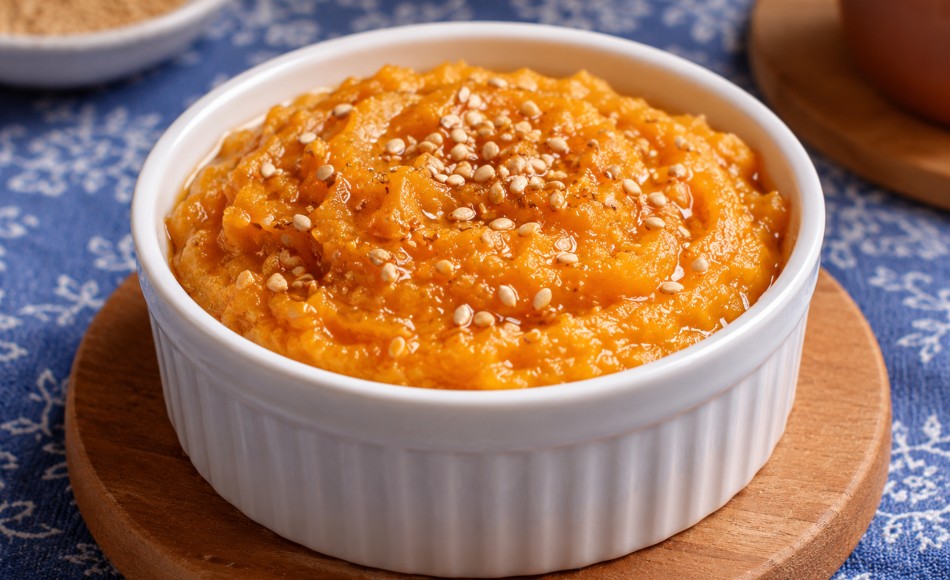
Peruvian bienmesabe is an old-fashioned spoon dessert made with yellow sweet potato, milk, sugar, egg yolks, and sweet wine. It has a thick, smooth, velvety texture, while cinnamon, cloves, and vanilla give it the aroma associated with traditional Lima confectionery.
Although the name bienmesabe refers to very different desserts in Spain and other Latin American countries, Peru’s most representative version is made with sweet potato. It has been documented since at least the nineteenth century and belongs to Lima’s historic dessert tradition, which was strongly influenced by convent baking.
It is traditionally presented in a large dessert dish or in small individual portions and garnished with toasted sesame seeds, walnuts, or pecans. This rich homemade sweet is commonly served chilled or at room temperature after a meal or during family gatherings.
Print
Peruvian Bienmesabe
- Prep Time: 20 minutes
- Cook Time: 1 hour
- Total Time: 1 hour 20 minutes
- Yield: 6 servings
- Category: Dessert
- Cuisine: Peruvian
Ingredients
- 1 kg of yellow-fleshed sweet potatoes
- 1 cup of evaporated milk
- 1 kg of sugar
- 1 cinnamon stick
- 3 whole cloves
- 3 egg yolks
- ¼ cup of sweet wine
- ¼ teaspoon of vanilla extract
- Toasted sesame seeds, for sprinkling
- Water, for boiling the sweet potatoes
Preparation
- Cook the sweet potatoes, scrub them thoroughly and place them whole in a large pot with the water. Cook over medium heat for 30 to 40 minutes, until a knife slides easily through the center. Drain, allow them to cool slightly, peel them, and press them through a potato ricer while still warm to obtain a smooth, lump-free purée.
- Make the bienmesabe base, place the sweet potato purée in a heavy-bottomed saucepan and add the evaporated milk, sugar, cinnamon stick, and cloves. Cook over medium-low heat for 20 to 25 minutes, stirring constantly with a wooden spoon so the mixture does not stick to the bottom.
- Reach the proper consistency, continue cooking until the mixture becomes glossy, thick, and begins to pull slightly away from the sides of the saucepan. When you draw the spoon across the bottom, the line should remain visible for a few seconds. Remove the cinnamon stick and cloves.
- Temper the egg yolks, whisk the yolks with the sweet wine in a bowl. Gradually add about 120 ml of the hot sweet potato mixture while whisking constantly. This gently raises the temperature of the yolks and prevents them from curdling.
- Finish cooking the dessert, slowly pour the tempered yolks back into the saucepan while stirring continuously. Cook over low heat for 3 to 4 minutes without allowing the mixture to boil vigorously, until it becomes creamy and evenly thick again. The use of egg yolks, milk, and sweet wine is characteristic of widely circulated traditional Peruvian recipes.
- Flavor and serve, remove the saucepan from the heat, add the vanilla, and mix well. Spoon the bienmesabe into a large serving dish or individual dessert bowls. Toast the sesame seeds in a dry skillet for about 2 minutes, then scatter them over the top. Allow the dessert to cool before serving.
Chef’s Tips
- Choose yellow-fleshed sweet potatoes with firm, naturally sweet flesh for the most traditional color and texture.
- Press the sweet potatoes while they are still warm to obtain a smoother purée.
- Use a heavy-bottomed saucepan and stir continuously once the mixture begins to thicken.
- Temper the egg yolks before adding them to prevent small pieces of cooked egg from forming.
- Do not let the mixture boil vigorously after adding the yolks; keep the heat low and remove it once it thickens again.
- Remember that the dessert will become firmer as it cools.
Traditional Variations
Some Lima recipes garnish bienmesabe only with toasted sesame seeds, while others use chopped walnuts or pecans. Both presentations are part of Peru’s domestic dessert tradition.
Regional versions may be prepared with ingredients such as loche squash, lúcuma, or cherimoya, particularly in cooking associated with Lambayeque. Sweet potato bienmesabe, however, remains the most widely recognized Peruvian variety.
Some families cook the sweet potatoes with cinnamon and cloves before mashing them, while others add the spices during the final cooking stage. Port or another mild sweet wine may be used.
How to Serve
Serve bienmesabe chilled or at room temperature in small dessert bowls. The traditional presentation is simple, with a smooth surface and a light garnish of toasted sesame seeds, pecans, or walnuts. Because it is rich and quite sweet, bienmesabe is best served in modest portions. It may be enjoyed after lunch or as an afternoon sweet with a hot, lightly sweetened beverage.
Recommended Pairings
- Peruvian-style brewed coffee
- Black tea
- Cinnamon or clove tea
- Cold milk
- It can also be served on its own in small portions.
Origin and Tradition
The word bienmesabe comes from Spanish confectionery and is applied to very different preparations depending on the country. In Peru, the dessert acquired its own identity through the use of sweet potato, an ingredient deeply rooted in the country’s food culture and traditional sweets.
The Lima version developed into a sweet potato cream enriched with milk, egg yolks, and wine. This combination brings together European confectionery techniques and an ingredient strongly associated with Peru, securing its place among Lima’s historic desserts.
Frequently Asked Questions
Yellow-fleshed sweet potato is the most suitable traditional choice because it has firm, naturally sweet flesh and an appealing color. It also produces a smooth purée. Avoid overly fibrous or watery varieties, which require longer cooking and may leave the dessert with an uneven texture.
First whisk the egg yolks with the sweet wine, then gradually add a small amount of the hot sweet potato mixture while whisking. Return the tempered mixture to the saucepan over low heat. Do not allow the bienmesabe to boil vigorously after adding the yolks.
The mixture should be thick, glossy, and pull slightly away from the sides of the saucepan. When you drag the spoon across the bottom, the line should remain visible for a few seconds. Do not wait until it becomes completely firm because it will continue thickening as it cools.
Sweet wine is part of the best-known traditional Peruvian recipes and contributes aroma, but some family preparations omit it. You can temper the yolks with 60 ml of evaporated milk instead. The dessert will retain its texture but will have a less complex aroma.
Store it in a covered container in the refrigerator for up to 3 days. Press plastic wrap directly against the surface to prevent a skin from forming. Before serving, leave it at room temperature for a few minutes so it becomes creamier.