
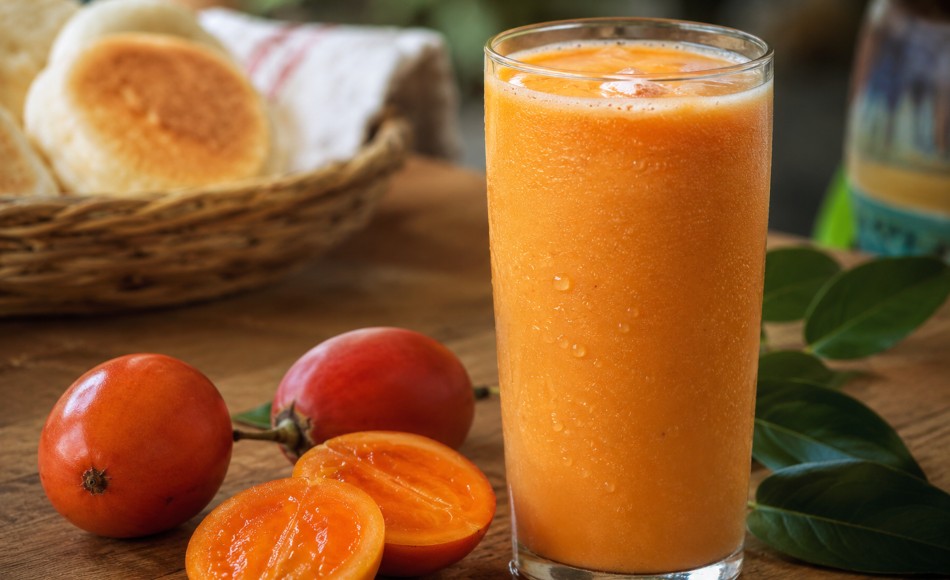
Tree tomato juice is a traditional drink from Colombia’s Andean regions, where this fruit is also known as tamarillo. It has a pleasantly sweet-tart flavor, fragrant pulp, and a vivid color that makes it one of the country’s most popular homemade fruit drinks.
The most familiar Colombian version combines ripe tree tomatoes, cold whole milk, sugar, and ice. The result is a creamy drink commonly enjoyed at breakfast, as an afternoon snack, or in traditional juice shops. In Colombia, tree tomatoes are also used in sauces and desserts.
Print
Colombian Tree Tomato Juice
- Prep Time: 10 minutes
- Total Time: 10 minutes
- Yield: 4
- Category: Beverage
- Cuisine: Colombian
Ingredients
- 4 ripe tree tomatoes, or tamarillos (about 500 g)
- 480 ml cold whole milk (2 cups)
- 50 g granulated sugar (4 tablespoons)
- 60 g crushed ice (¼ cup)
Preparation
- Prepare the fruit, wash the tree tomatoes, cut them in half, and scoop out the pulp with a spoon. Discard the peel and avoid adding any especially tough seeds.
- Blend the juice, add the pulp, cold milk, and sugar to a blender. Blend for about 1 minute, until the mixture is smooth, creamy, and bright orange.
- Strain the drink, pour the juice through a fine-mesh strainer to remove seeds and fibers. Press gently with a spoon to extract the liquid pulp without forcing through coarse pieces.
- Chill and serve, return the strained juice to the blender, add the crushed ice, and blend for a few more seconds. Serve immediately in tall glasses.
Chef’s Tips
- Choose ripe tree tomatoes with skin that feels slightly soft and has no firm green patches.
- Avoid overblending the seeds because they can make the drink feel gritty.
- Taste the juice before adding extra sugar since tartness depends on the ripeness of the fruit.
- Use thoroughly chilled milk so the drink stays creamy without relying on too much ice.
Traditional Variations
In some Colombian households, tree tomato juice is made with cold water instead of milk for a lighter, more refreshing result. You can also use equal parts water and milk, a common option when you want some creaminess while keeping the fruit flavor more pronounced.
How to Serve
Serve tree tomato juice immediately after blending, cold and creamy. It is often paired with Colombian baked goods at breakfast or during an afternoon snack.
Recommended Pairings
- Cheese arepas.
- Almojábana.
- Pandebono.
- Colombian empanadas.
- You can also enjoy it on its own as a refreshing drink.
A Culinary Fact
Tree tomato grows in Colombia’s Andean regions and throughout parts of South America. In Colombia, it is especially valued for its versatility: its pulp is used in fruit drinks, frozen desserts, jams, sauces, and homemade sweets.
Frequently Asked Questions
Yes. You can make it with cold water when you want a lighter, more refreshing drink. The milk version is richer and creamier, closer to a smoothie, while the water-based version highlights the tree tomato’s natural tartness. Both approaches are traditional and commonly enjoyed in Colombia.
Straining is recommended because tree tomatoes contain seeds and fibers that can affect the texture. Blend the pulp with milk and sugar first, then strain the mixture before adding ice. This produces a smoother drink and prevents the ice from melting too much while you work with the fruit.
Yes. Frozen pulp works well when fresh tree tomatoes are unavailable. Let it thaw partially before blending and use slightly less ice. Frozen pulp keeps the fruit’s characteristic flavor, although you may need a little more sugar depending on how tart the pulp tastes.